Taiwan's Anduril ALTIUS-600M Drones Arrived Without a Charger. The Original Was Made in China.

September 15, 2026
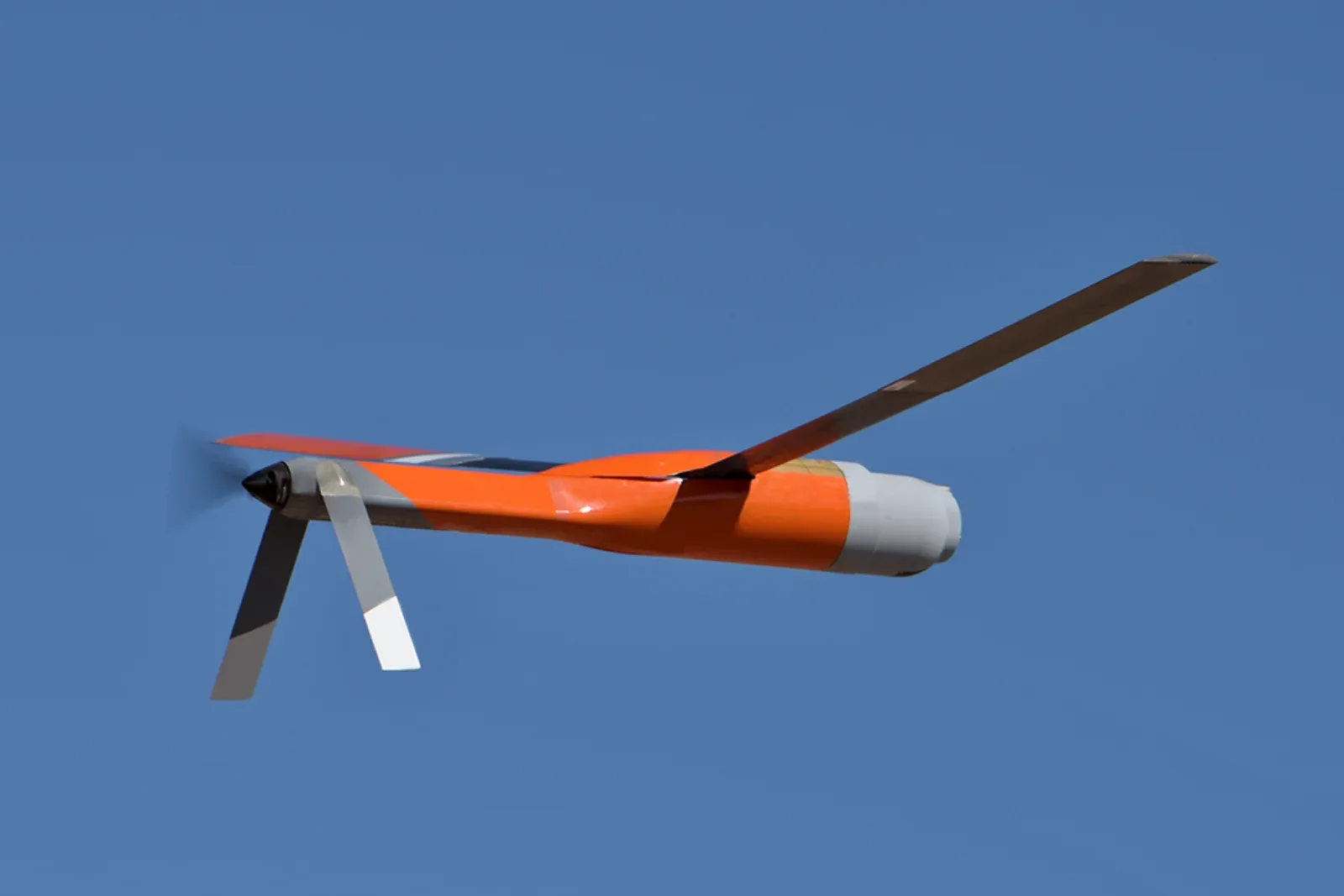
Taiwan's Army took delivery of its full order of Anduril ALTIUS-600M loitering munitions this year, with Anduril founder Palmer Luckey in Taipei for the handover. It then found it could not charge them without American help. The reason, first reported by Storm Media and since confirmed in outline by the Army, is that the manufacturer's charger contains Chinese-made components and was excluded from the US Letter of Offer and Acceptance (LOA) on that basis.
The money involved is small. The case is useful because it shows three things at once: Taiwan's non-red rule is stricter than the US one; it caught a part the US rule does not cover; and once caught, Taiwan had no way to fix the problem itself.
What happened
Anduril's ALTIUS-600M and AeroVironment's Switchblade 300 were acquired under the Army's Hunting Owl Project (獵鴞專案), initiated in 2024. The US cleared the Foreign Military Sales (FMS) case for 291 ALTIUS-600Ms and related equipment in June 2024; deliveries began in August 2025 and were completed in March 2026. The Switchblade 300s have not yet arrived.
The charger was not in the LOA. The Army noticed only after the equipment was in Taiwan. When it asked Washington, the answer was that the original charger is Chinese-made and had never been included in the quote. The Army asked for a non-Chinese alternative; as of April 2026 none had been sourced, and US technical representatives were traveling to Taiwan to charge units before launches.
The Army's response, issued the evening of September 9, does not dispute these facts. It says the original manufacturer has completed development of a non-red-supply-chain charger, which will be delivered on the program schedule, and that the drones shipped at full charge, so readiness is not affected. TVBS reported the Army confirmed the replacement is US-made, will be delivered next year at no additional cost, and that US charging support continues until then. The Army also said the airframe battery has a two-year storage life. Anduril declined to comment.
On September 10, Democratic Progressive Party (DPP) legislator Wang Ting-yu added a further claim: the military and the US have completed a non-red supply chain for both the charger and the battery, the battery will be manufactured in Taiwan, and a well-known Taiwanese manufacturer has already received a technology transfer and begun production. He did not name the company. He also said Taiwan could become a supplier of batteries and chargers to Anduril's other customers.
What is contested
Two further claims in the Storm Media report are disputed or unconfirmed.
First, the spare-battery quantity. Storm Media's sources put the spare-battery order at nearly eight times the number of airframes, for a single-use weapon, and said the Army had asked the US to reduce it. The Army's statement says each airframe was bought with one installed battery and one spare. Both accounts cannot be right.
Second, the budget gap. The program was budgeted against an initial US estimate of about NT$11.5 billion; the final price was roughly NT$5.5 billion. Lawmakers from both parties have asked whether the original request was inflated. The Army has not published a reconciliation.
The ALTIUS-600M's performance record is also part of the argument. Reports in February claimed three of five airframes crashed in the first live-fire test; in June the military released footage of more than ten launches and claimed a 100 percent hit rate. Kuomintang (KMT) legislator Ma Wen-chun, who raised the charger issue in the Legislature on September 9, has asked how far anti-jamming performance has been verified under realistic electronic warfare conditions.
All of this arrives during a dispute over drone budgets between the KMT-controlled Legislature and the DPP government, and both sides are using it. Ma is an opposition legislator who regularly publicizes procurement details; Wang is a government legislator defending a program under attack, and his battery-localization claim names no company and has not been confirmed by the Ministry of National Defense. Neither party's framing should be taken as the record.
Why the charger matters
The US non-red rule is narrower than Taiwan's. Anduril and Luckey are under Beijing sanctions, and ALTIUS is in service with the US military. Neither fact prevented a Chinese-made accessory from being in the original bill of materials (BOM). Section 848 of the National Defense Authorization Act (NDAA) and the Blue UAS review cover the aircraft and named components: flight controllers, radios and data links, cameras, gimbals, ground control stations, and, under newer programs, motors and batteries. Chargers and other ground support equipment are not on the list, and ALTIUS is not on the Blue UAS Cleared List in any case. Taiwan's Army, by contrast, applies a no-Chinese-content rule to the whole delivery. TVBS put it directly: the US standard for accessories is looser than Taiwan's. We have mapped where each rule draws its line and which Taiwanese firms sit on each side of it; the ALTIUS charger is a reminder that a buyer's own standard can exceed the exporting government's.
The oversight is explainable, and not specific to Anduril. ALTIUS was designed by Area-I, a small Atlanta firm Anduril acquired in 2021, and the -600 predates 2020. A small company building a tube-launched UAV would have bought commercial lithium chargers, and that market is almost entirely Chinese-manufactured. Anduril inherited the BOM. The US side knew the charger was Chinese only because it had to be sourced for the LOA; nothing in US screening would otherwise have asked the question. The Skydio case is the precedent: a US manufacturer with a US-built airframe, cut off from batteries by Beijing in 2024 over a sale to Taiwan's fire agency, because batteries were one of the few things it still bought in China.
Both sides of the LOA missed it. The US side dropped the charger rather than flag a non-compliant part and propose a substitute. The Taiwan side signed a quote for a battery-powered munition with no charger on it. Neither is unusual in FMS. The result is a munition that cannot be charged in the field without a foreign technician, and a replacement not due until 2027.
Taiwan could not fix it alone. Taiwan has a large charger, power-supply and battery-management industry serving consumer electronics, EVs and industrial customers, and a drone battery charger is standard hardware. None of that helped. Under FMS the customer contracts with the US government against a fixed configuration, and a charger for a sealed munition pack, with its own connector, battery management system (BMS) handshake and safety qualification, is not something a third party can build without the original equipment manufacturer (OEM)'s data.
Substituting one would mean a configuration change requiring US approval and would put warranty and support at risk. The Army's statement that the replacement comes at no extra cost is consistent with this: the vendor owns the defect and the fix, and Taiwan waits. The route into that supply chain, if Wang's account holds, is the one he described: a technology transfer from the OEM to a Taiwanese manufacturer, on the OEM's terms. Taiwanese industry enters through the vendor, not around it.
Washington's rule runs ahead of its supply base. None of this is hypocrisy in the strict sense: the US rule never claimed to cover chargers, and Anduril followed it. What the case shows is that the US definition of non-red is a compliance perimeter, not an industrial fact. A US munition, from a company Beijing has sanctioned, in service with the US Army, shipped with a Chinese charger because no one in the US supply chain had a reason to replace it.
When an ally with a stricter rule asked for a compliant one, the answer was a wait into 2027 and, on Wang's account, a technology transfer to a Taiwanese factory. The timing sharpens the point. A 15 percent Section 232 tariff on Taiwanese drones took effect on September 3, the week this story broke, on the reasoning that imported drones threaten US industrial capacity; US buyers spent a record $6.4 million on Taiwanese drones in the three weeks before it went into effect. The country being tariffed is the one now apparently supplying the compliant battery. There are two ways to read this. The generous reading is that the US perimeter keeps expanding, motors and batteries were added recently, and ground support equipment will follow. The other is that the perimeter expands faster than the industry behind it, and allies with stricter rules will keep finding parts the US never checked. Taiwan's own position is not clean either: its non-red battery will still, in all likelihood, sit on Chinese cathode and anode material.
That is why the battery claim matters more than the charger. A charger is a commodity; a licensed non-red battery pack for a US munition is a qualified product with a US customer attached. It also lands on the weakest link in Taiwan's non-red story. Research published in July by DSET, a Taipei think tank, found Chinese cell content in Taiwan-made drones fell from about 70 to 50 percent between 2024 and 2025, while upstream cathode and anode materials remain overwhelmingly Chinese; we set out what that data shows and returned to it last week. Whether the ALTIUS pack is non-red at the cell level or at the materials level is the question a serious buyer would ask first, and nobody has answered it. At least one Taiwanese pack builder documents its answer down to named cell and material suppliers, at a cost it puts at roughly two and a half times a Chinese-sourced pack. Buyers specifying battery packs and BMS from Taiwan face the same question on every inquiry.
What comes next
The larger order is already placed. A contract of roughly NT$26.9 billion posted on the government e-procurement platform at the end of August covers 1,554 ALTIUS-700M anti-armor drones and 478 ALTIUS-600 intelligence, surveillance and reconnaissance (ISR) drones for Army frontline units, with deliveries from the fourth quarter of 2026 through 2033. Whether that LOA lists chargers and batteries, where they are made, and which Taiwanese company holds the battery technology transfer are the questions for the next Foreign Affairs and National Defense Committee session.
Sourcing drones or components from Taiwan?
Tell us what you need — we match it to verified Taiwan-based manufacturers and make the introduction. There's no charge to submit a request.
Source these components from Taiwan →Beyond Ukraine and the US: Where Taiwan's Drone Demand Comes From Next
Sep 9, 2026
Taiwan exported more drones in the first half of 2026 than in all of 2025, but D...
What Taiwan's Counter-Drone Audit Reveals About Its Own Datalink Resilience
Sep 4, 2026
An audit found Taiwan's counter-drone system lacks effective detection and count...
Ukraine Is Now Making Its Own Drone Motors and Flight Controllers. What's Left for Taiwan?
Aug 21, 2026
Ukrainian drone makers are localizing the components Taiwan sells them. The anno...