
Why Taiwan's Origin Prosecutions Matter to Foreign Drone Buyers

October 15, 2026
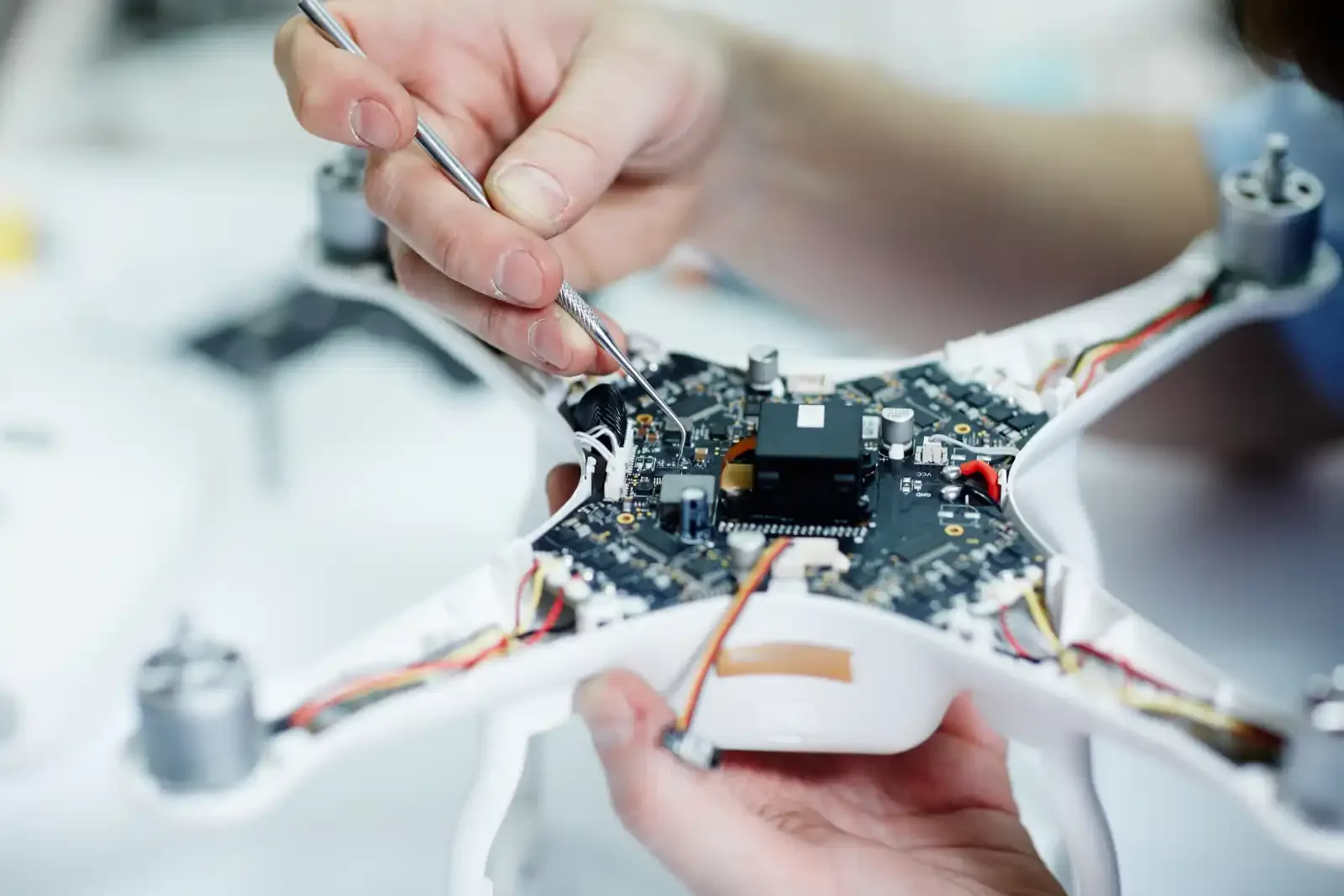
On October 9, a Taoyuan court ordered two executives of Jiin Ming Industry, a listed drone maker, held for two months. Prosecutors allege the company and a subsidiary put banned Chinese chips and camera lenses into drones supplied to the army, and submitted false certificates of origin to get them accepted.
It is the second Taiwanese drone supplier investigated under the National Security Act since August, after Hang Jian Technology. In the same week, prosecutors in Taipei searched three companies accused of passing off Chinese software as Taiwanese in foreign ministry contracts.
A foreign buyer could read this as evidence that Taiwan's non-Chinese supply chain is unreliable, and some in foreign drone circles already suspect as much. We think the cases indicate the opposite. An industry that sells on origin needs this kind of enforcement, and in each of these cases the problem was found and acted on, with executives in both drone cases detained under the National Security Act. That does not mean the problem is solved, as the later sections set out.
The three cases
| Hang Jian Technology | Jiin Ming Industry | Foreign ministry software | |
|---|---|---|---|
| Buyer | Army 8th Corps: 180 training drones in three batches, on a NT$2.95 million bid | The army, under several drone contracts won by Jiin Ming and its subsidiary 英盛國際 | Ministry of Foreign Affairs: IT asset management contracts worth more than NT$20 million, 2023 to 2025 |
| What is alleged | Chinese chips and flight control boards, with labels covered and false certificates of origin | Banned Chinese chips and camera lenses, with false certificates of origin submitted for acceptance | Chinese endpoint software, IP-guard by Guangzhou Yixin Technology, repackaged by three companies as a Taiwanese product |
| How it came to light | The army's acceptance inspection | Not disclosed; the raids followed a report that the company had breached its contracts | The ministry's routine inspection in December 2025 |
| Suspected offenses cited | National Security Act; attempted fraud | National Security Act; using falsified business records; aggravated fraud | Government Procurement Act |
| Status | Company head detained in August | Six locations searched on October 8; general manager and sales director detained for two months from October 9 | Ten locations searched and four people questioned on October 12 |
All of these are allegations. No one has been convicted, and everyone involved is presumed innocent.
In August, Taoyuan prosecutors also searched the PCB maker Unimicron over boards allegedly made in China and relabeled as Taiwanese. That is a trade case rather than a procurement one, and no charges had been filed when we reported it.
We have mentioned Jiin Ming's drone business in past weekly roundups, most recently its Blue UAS training in August.
What the cases show
In two of the three cases, the buyer found the problem. The army identified the suspected parts in the Hang Jian case at acceptance, and the foreign ministry found the software during its own inspection. In Jiin Ming's case, prosecutors say only that the raids followed a report that the company had breached its contracts; they have not said who made it.
Prosecutors are pursuing both drone cases under the National Security Act as well as fraud provisions. The court ordered Jiin Ming's general manager and sales director held for two months without visitors, citing the case's national-security implications. The company's shares fell by the daily limit on October 12, the first trading day after the arrests were reported.
On October 13, Defense Minister Wellington Koo told reporters that the problems had arisen in small army purchases of two or four drones and that larger procurements had been unaffected. He acknowledged that those small purchases had not been torn down for inspection, which is how the problem arose, and said they will now be inspected the same way.
For a supplier, this raises the cost of a false certificate of origin. Signing one for a government buyer can now lead to a national-security prosecution in addition to losing the contract. We made a related argument about written origin claims last week.
Why the industry needs this
Our sourcing work and our conversations with foreign buyers and others in the drone industry have surfaced a doubt held in some circles abroad: that Taiwanese "non-red" claims cannot be taken at face value. The reasons given are familiar. Many Taiwanese manufacturers also run factories in China, components move between the two, and a "Made in Taiwan" label can describe final assembly rather than the parts inside.
That doubt is a cost to every Taiwanese supplier, including the honest ones. When buyers discount Taiwanese origin claims as a group, each supplier faces longer qualification, more checks and pressure on price, whatever its own record. A false certificate of origin from one supplier lowers the value of every accurate one.
The two drone cases make that cost sharper. Taiwanese media and opposition politicians have described both companies as part of the government's "drone national team," the informal label for suppliers associated with its push for a non-Chinese drone industry. A case against a company under that label reflects on the whole program, which is a further reason it has to be pursued in the open.
The cases are also being read abroad. Within two days of the arrests, Hong Kong's South China Morning Post reported Jiin Ming as the second Taiwanese drone supplier investigated in two months, and tied it to opposition scrutiny of the government's "non-red" drone effort.
Enforcement is the most direct answer to that doubt. A buyer who sees origin fraud prosecuted as a national-security offense, with executives detained, has evidence that the claim is policed by the state and not only by the supplier making it. A record with no cases at all would be harder to read: it could mean there is no fraud, or that no one is looking.
For that to hold, enforcement has to be consistent and visible. The cases need to reach verdicts, the outcomes need to be public, and checks such as the army's teardown rule need to extend beyond the small purchases where the problems were found.
What the cases do not show
Three procurement cases in about two months, across drones and software, show the problem is not confined to one company or one sector. They are also only the cases that were detected.
Detection came late. The Hang Jian drones were identified at acceptance, after delivery, and the foreign ministry used the software under contracts running from 2023 to 2025 before its December 2025 inspection.
None of the cases has reached a verdict. The Jiin Ming detention ruling can be appealed, and the allegations may narrow or be dropped.
There is also political disagreement about the government's record. Taiwan People's Party chair Huang Kuo-chang said the government had spent heavily promoting a "non-red drone national team" and asked whether anyone would be held responsible. Koo's statement that large procurements were unaffected is the government's account; we have not seen evidence that confirms or contradicts it.
What it means for foreign buyers
Taiwan's enforcement tells a buyer that a false origin document carries legal risk for the supplier who signs it. It does not tell the buyer whether a particular supplier's documents are accurate.
The army's response, teardown inspection even on two-drone orders, reflects a decision that paperwork alone is insufficient. Foreign buyers can take the same approach:
- Check the supplier's public record. Ask for its unified business number at first contact, and search the Government e-Procurement System and the news for its name and its affiliates.
- Ask for documents you can verify, down to the components that matter for your program, and keep them. A named-supplier bill of materials shows what that can look like.
- Inspect deliveries, not only samples, with the right to open the product written into the contract.
- Build in audit rights and change notification, so that a supplier who passes once has to keep passing.
Whether buyers come to trust Taiwanese origin claims will depend more on how consistently cases like these are pursued than on how many arise.
Sourcing drones or components from Taiwan?
Tell us what you need — we match it to verified Taiwan-based manufacturers and make the introduction. There's no charge to submit a request.
Source these components from Taiwan →Taiwan Drones Weekly News Roundup: October 5 - 11, 2026
Oct 11, 2026
Taiwan’s economics ministry more than doubled its drone R&D grants this week and...
Taiwan Drones Weekly News Roundup: September 28 - October 4, 2026
Oct 4, 2026
This was the week Taiwan's drone strategy got concrete in the literal sense: a s...
Taiwan Drones Weekly News Roundup: September 21 - 27, 2026
Sep 27, 2026
Taiwan's drone story this week is really two stories running in parallel: one ab...