Non-Red Is a Capability, Not a Market

September 17, 2026
The supply-chain work a Taiwanese firm does to build a drone motor without Chinese parts is the same work it needs to sell an actuator to a robotics startup, a power stage to a server maker or a magnet to an EV line. The cost is paid once. The defense risk attaches only to the defense slice. Suppliers who treat non-red as a capability rather than a drone strategy will find the math works; suppliers who treat it as a bet on drones alone mostly won't.
A common question we hear from Taiwanese component makers is some version of: is the drone business worth it? The honest answer, on drones alone, is usually no. Taiwan's drone industry is projected at NT$20 billion this year. The work is custom, the lots are typically small (especially in the beginning), the ordering is program-funded and irregular, and a visible defense customer list carries a risk in Beijing that a motor maker with a Dongguan plant or PRC customers for its main line cannot ignore. Against that, a supplier is asked to re-source magnets, cells, laminates and microcontrollers, build bill-of-materials traceability, learn Taiwan's strategic high-tech commodity licensing, and in some cases even give up Chinese business it has held for twenty years.
That framing is wrong, though, and the error is in the word "drones." The non-Chinese supply chain a firm builds for a drone motor is not a drone asset. It is a manufacturing capability that several other markets are now paying for, most of them larger than drones, and most of them carrying none of the defense risk.
What the risk actually is
It helps to separate two things that get discussed as one.
The first is the cost of going non-red at all. Qualifying a Japanese or Korean magnet source, a non-PRC cell, an electrolyte from a Taiwan-capital producer; documenting origin down to the material; losing the Chinese customers or the Chinese plant that a public non-red position makes untenable. As our profile of E-CURRENT described, certifying new material sources runs on its own slow timeline, independent of demand. This cost is paid whichever market the parts go into. It is a fixed cost of the capability.
The second is retaliation, and it attaches to something narrower. Beijing's export-control listings of Taiwanese firms target military suppliers: AIDC, Geosat, NCSIST, JC Tech and four shipbuilders in July 2025, banning Chinese dual-use exports to them. In April 2026 the same treatment went to seven European entities, including four Czech drone-adjacent firms, for "arms sales to or collusion with Taiwan." China's October 2025 rare-earth regime makes the same distinction in law: export licenses for military end-use are presumptively denied, while commercial licenses proceed case by case. Beijing sanctions suppliers to militaries. It has not, so far, sanctioned Taiwanese firms for selling non-red components to commercial customers, and it would be an odd place to start, since that is simply trade.
So the two costs fall on different decisions. Going non-red costs Chinese business. Supplying a defense program additionally risks sanctions. A supplier can pay the first without incurring the second.
The markets already paying for the capability
The non-red supply chain Taiwan is building did not start with drones and is not being financed by them.
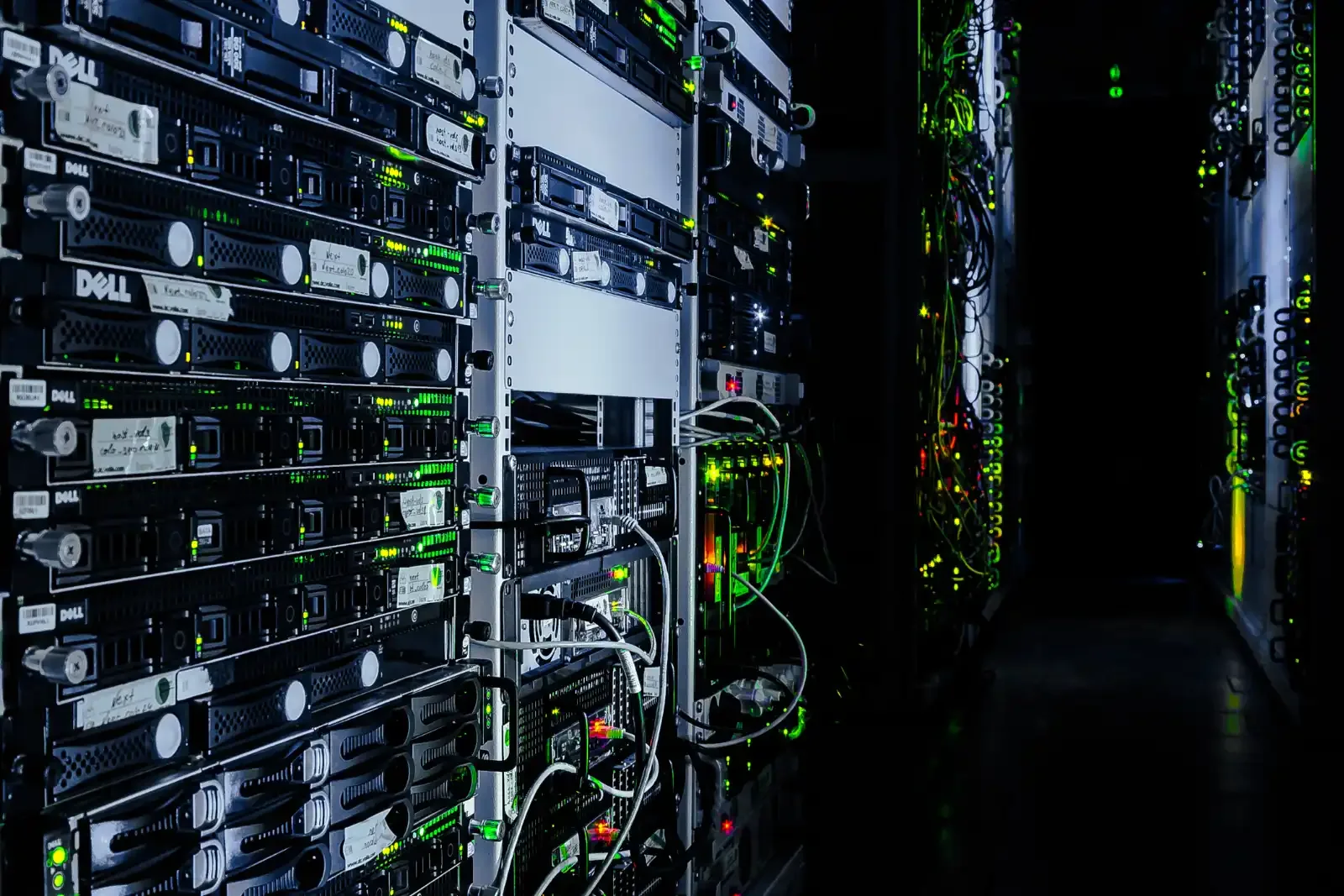
AI servers. Taiwan's contract manufacturers build most of the world's AI servers, and the ones bound for the United States have left China. The reasons are tariffs, export controls and security rather than component provenance: Section 301 and IEEPA rates on Chinese-origin servers exceeded 100 percent at their April 2025 peak, and semiconductor export controls bar the most advanced accelerators from being assembled in China at all. China's share of U.S. data-center computing imports fell from 51 percent in 2020 to 4 percent in 2025 while Taiwan's rose tenfold. Taiwanese ODMs are expanding in the U.S., Mexico and Southeast Asia to meet customers' local manufacturing requirements, and Mexico shipped US$46.9 billion in servers to the U.S. in the first five months of 2026, second only to Taiwan. This is not a full non-red bill of materials; a Mexico-assembled server still carries Chinese passives and nobody certifies its BOM. But the board-level production, power stages and thermal hardware moved with the assembly, and the Taiwanese firms that built that capacity outside China are the same ones drone and robotics buyers now need. It is the largest de-China'd business Taiwan has, and it is commercial.
Electric vehicles. U.S. rules on foreign entities of concern disqualify EVs from the federal tax credit if their batteries contain components manufactured by a Chinese-controlled firm or minerals processed by one. Traction motors run on rare-earth magnets, and China's 0.1 percent value threshold on Chinese-origin rare earths in foreign-made goods now reaches into Taiwanese motor factories. A Taiwanese motor maker that has re-sourced its magnets for an EV customer has already done the hardest part of the drone motor job. Taiwan's rare-earth refining and recycling push exists for e-mobility and electronics; drone motors are a beneficiary.
Power electronics. On July 28 the FCC added foreign-made humanoid robots and power inverters to its Covered List, using the same mechanism it applied to drones in December: equipment on the list cannot receive an FCC authorization, which most electronics need to be imported or sold. Inverters are a Taiwanese strength, and the non-red version of one uses the same magnetics, power semiconductors and BMS competence as a drone ESC.
Robotics. The next market, and the one that most resembles drones at the component level. The FY2027 NDAA as passed by the House carries Section 163, barring the Pentagon from procuring or operating humanoid robots linked to China, Russia or Iran; the Pentagon's June 1260H update added Unitree, RoboSense and Autel, and from June 30, 2027 the department may not procure goods containing listed companies' products. The bipartisan American Security Robotics Act would extend the procurement ban government-wide. Demand at the bill-of-materials level is already there: a Houston humanoid startup told Rest of World that U.S. clients had been requesting robots with no Chinese components before the FCC ban, and that it was sourcing parts from Taiwan, Japan, South Korea and Italy because domestic alternatives don't exist yet. A robot pack is mostly battery-management and integration where an FPV pack is mostly cells; a robot joint is a frameless torque motor, a driver, a reducer and an encoder. Taichung's precision-machinery cluster is better positioned for the actuator than for the propeller.
None of these markets is drones. All of them buy the same capability.
Where drones fit
Drones are where the price of the capability is most explicit and its risk most concentrated. The non-red premium, the willingness to pay two or three times the Chinese price for a component with a documented origin, exists only where a rule or a program office requires it, and that means defense and government procurement. Commercial drone buyers buy Chinese on price. So the drone business is defense business almost by definition, and the retaliation risk comes with it.
That is not an argument against taking it. The Ukraine corridor, which carries most of Taiwan's roughly 139,000 drones exported in the first quarter, is defense demand, and it is the largest and most immediate market for Taiwanese drone parts that exists. The Section 232 tariff's 15 percent allied rate, the Blue UAS pathway and India's draft defense-procurement origin rules all reward the same capability. A supplier that has built it for servers or vehicles can sell into defense without building it again.
The demand side of that trade is visible at Shield AI, the San Diego company behind the Hivemind AI pilot and the V-BAT, for which Taiwan's navy has budgeted NT$36 billion for 280 aircraft over 2026–2029, more than the company had delivered to all customers through 2024.
Its Taiwan representative told the Liberty Times that Taiwanese content in the company's products rose from under 1 percent two years ago to 16 percent in May and June, and could reach a quarter of an individual drone's value. Some of that is the ordinary logic of a large program: an AIDC agreement to deploy and sustain the aircraft in Taiwan, and a plan for local logistics, maintenance and some assembly so support never routes through the US in a crisis.
But what he said Shield AI is buying is weight, endurance and heat dissipation, which are battery and thermal competencies, not drone ones. And the partners the company names are AIDC, NCSIST and Thunder Tiger, the first two already on Beijing's July 2025 list. A US prime running a military program in Taiwan can publicly name only the suppliers that have nothing left to lose in China; who supplies the other nine points of growth to 25 percent, the interview does not say.
So this is an argument about identity. Beijing's designations name visible military suppliers; they have not reached a firm for the composition of its bill of materials, which Beijing cannot see. That leaves most Taiwanese component makers, who are not going to give up their China business, with a workable position: build the non-red capability, sell it openly to server, vehicle and robotics customers who need it, and supply defense programs project by project without making that the company's public face. The capability is real and the customers are real; the sanction risk attaches to the label, not the work. A supplier that builds the capability for drones alone and makes non-red drones its identity has done the reverse: spent the fixed cost against a NT$20 billion market and put its name on the one thing Beijing punishes. The first is a manufacturing strategy. The second is a wager.
The sorting
This produces the same division we have described in the tariff and the demand-side pieces, seen from the supplier's chair.
Firms that are already China-clean, by history or by decision, can wear the defense label. For them drones are simply the best outlet for a capability they have, and the paperwork is a cost of entry. Thunder Tiger's American lines, Shield AI's named Taiwan partners and the suppliers lining up for ITRI's Green UAS evaluations are in this group.
Suppliers with meaningful China exposure, which is many of the industry's small and mid-size specialists, have a different path. Build the capability, because servers, vehicles and inverters are paying for it anyway and Beijing's own rare-earth licensing is forcing the question. Sell it commercially and openly. Take defense work through private channels, with verification held rather than published, and with the customer's end-use paperwork done properly. That path is only available if someone provides the private channel, which is why it matters that the industry's sourcing infrastructure is being built with two tracks rather than one.
The mistake, for either group, is to evaluate drones as a market. Drone buyers are a customer for a capability. The capability is what Taiwan's component makers should be deciding whether to build, and the answer is being written by hyperscalers, automakers and the procurement rules in Washington and Beijing, not by drone buyers.
→ Subscribe to Taiwan Drone Weekly for ongoing coverage: www.taiwandrones.com/subscribe
→ Suppliers: contact us at info@taiwandrones.com
This analysis draws on public notices from China's Ministry of Commerce as reported by CNA and The Diplomat, the FCC's July 2026 Covered List action, the House-passed FY2027 NDAA, the Pentagon's Section 1260H list, Treasury's FEOC guidance, the Taiwan Printed Circuit Association's Q1 2026 survey, trade reporting on Taiwanese server production, the Taipei Times' September 2026 report on Shield AI's Taiwan sourcing, reporting on the navy's V-BAT budget submission, and TaiwanDrones' prior coverage of the Section 232 tariff, Taiwan's rare-earth supply chain and the E-CURRENT bill of materials. The characterization of which Taiwanese firms carry China exposure is a generalization from supplier conversations and is not a statement about any named company.
Sourcing drones or components from Taiwan?
Tell us what you need — we match it to verified Taiwan-based manufacturers and make the introduction. There's no charge to submit a request.
Source these components from Taiwan →Taiwan's Anduril ALTIUS-600M Drones Arrived Without a Charger. The Original Was Made in China.
Sep 15, 2026
Taiwan's Army took delivery of 291 Anduril ALTIUS-600M loitering munitions and t...
Beyond Ukraine and the US: Where Taiwan's Drone Demand Comes From Next
Sep 9, 2026
Taiwan exported more drones in the first half of 2026 than in all of 2025, but D...
What Taiwan's Counter-Drone Audit Reveals About Its Own Datalink Resilience
Sep 4, 2026
An audit found Taiwan's counter-drone system lacks effective detection and count...