
Taiwan Has No Rare Earth Reserves. Can It Still Build a Magnet Supply Chain?

August 24, 2026
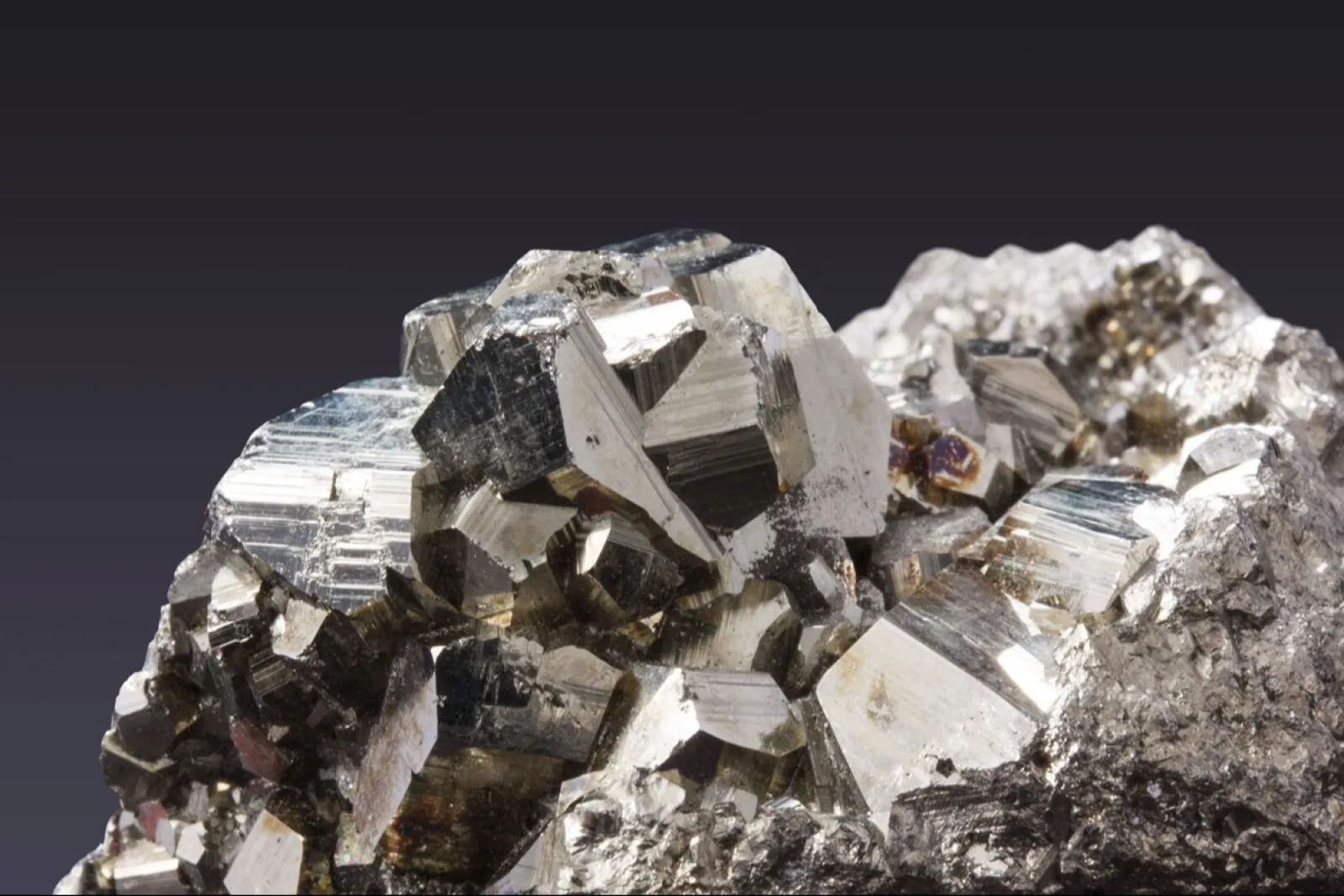
Taiwan has no domestic rare earth reserves. It is building a refining and recycling industry anyway. The Industrial Technology Research Institute (ITRI) said in November it plans to begin transferring rare earth extraction and recycling technology to private manufacturers in 2026, with the work centered on neodymium and dysprosium, the two elements behind the NdFeB magnets that power drone, robotics, and EV motors.
Two caveats belong at the top. First, ITRI's own numbers describe a pilot, not a production line: the institute has refined material containing roughly 5 percent rare earth content up to 99.9 percent purity and produced a neodymium-iron-boron alloy in the lab, but a Taiwanese fact-checking organization, MyGoPen, reported in late October, that the Ministry of Economic Affairs' rare earth initiative had not yet produced verifiable commercial output. As of this writing, ITRI has not publicly named which private manufacturer or manufacturers will actually receive the transferred technology, and no completed transfer has been reported so far this year. Second, "Taiwan builds a rare earth industry" does not mean "Taiwan stops depending on China for rare earths." Refining and recycling address the processing chokepoint, not the mineral itself, and Taiwan still has to get raw or recycled feedstock from somewhere. Those two qualifications shape everything that follows.
The mineral Taiwan doesn't have
Taiwan holds no meaningful rare earth reserves of its own and currently sources the vast majority of its supply from China, with smaller volumes from the US and Japan, according to Economics Minister Kung Ming-hsin, cited by CNA and reported in Taiwan News. Kung put Taiwan's annual rare earth demand at close to 2,000 tonnes as electronics manufacturing and semiconductor foundry capacity continue to expand, driven by everything from EV motors to fighter jets to the permanent magnets inside drone motors and actuators.
The concentration risk sits almost entirely downstream of mining. China's advantage was never really about how much ore sits under Chinese soil. A working paper published by the International Monetary Fund in 2026 modeled an 80 percent rare earth supply disruption across six advanced economies and found Japan, the US, and Germany most exposed, with Japan facing a potential real GDP loss of 1.8 percent under a low-substitution, short-horizon scenario. Japan's own experience illustrates why: Tokyo spent roughly fifteen years diversifying mining sources, cutting China's share of its rare earth imports from about 90 percent to under 60 percent by 2020 through investments like the 2011 stake in Australia's Lynas Rare Earths. Beijing's separation, metal-refining, and magnet-making capacity, the parts of the chain that turn ore into something a motor factory can use, remained largely untouched. When China curbed dual-use mineral exports to Japan following remarks by Prime Minister Sanae Takaichi on Taiwan, Japanese imports of dysprosium and terbium for EV motors fell to zero in the January-to-April period, and yttrium imports dropped by more than 90 percent year-on-year.
That is the structural lesson sitting underneath Taiwan's own rare earth push: mining diversification is necessary but not sufficient. The chokepoint is refining.
What ITRI is actually building
ITRI's project dates to 2023, when the institute stood up dedicated research facilities before scaling into larger R&D work in 2024. The Ministry of Economic Affairs' Science and Technology Program has funded the effort since then, and ITRI has focused its extraction and refining work specifically on neodymium and dysprosium, which Tsao Shen, managing director of ITRI's Materials and Chemicals Research Laboratories, told Taiwan News are the two most in-demand rare earths, needed for the magnets inside the energy-efficient motors Taiwan's electrification push depends on, with dysprosium added specifically where a motor faces high heat or heavy loads. Tsao also drew a distinction worth keeping in mind for readers focused on the chip industry: rare earth use in semiconductor manufacturing is comparatively limited, mostly chemical-mechanical polishing and a handful of high-dielectric materials and equipment components, so the associated supply risk there is lower than for EVs or other motor-dependent industries, including drones. ITRI's refining process draws on wastewater and acid-recycling techniques the institute previously developed for the semiconductor and optoelectronics industries, applying them to cut waste output by roughly half and chemical use by more than 40 percent, with an energy-reduction target of 30 percent by the end of this year.
The government side of the plan has a timeline attached to it. Kung told reporters in February, after leading Taiwan's delegation to the sixth Taiwan-US Economic Prosperity Partnership Dialogue in Washington, that the ministry aims to build a pilot-scale rare earth production line within three years capable of meeting roughly half of Taiwan's domestic demand, with trial production technology already designed to cover about one-third. Rare earth cooperation was one of four pillars of that dialogue, alongside supply chain security, third-country cooperation, and bilateral economic ties, and both governments signed a Joint Statement on the Pax Silica Declaration committing to deepen collaboration on mining, refining, and electronic-waste recycling. US officials told the Taiwanese delegation they see Taiwan's model, once it matures, as replicable in other partner countries, and that Washington is willing to help Taiwan secure raw-material access while developing third-country rare earth production alongside it. The same dialogue produced a drone-specific deliverable: ITRI signed a Green UAS authorization and evaluation agreement with the US-based Association for Uncrewed Vehicle Systems International, the certification track we've covered in detail elsewhere.
The recycling bet: urban mining as a second track
Refining virgin ore isn't Taiwan's only play. A parallel push treats end-of-life batteries, fluorescent lamps, and industrial scrap as a domestic ore body, an approach sometimes called urban mining. New Taipei City-based UWin Nanotech uses solution-based hydrometallurgy to recover cobalt, nickel, and lithium from spent batteries at purity levels matching virgin material, according to cofounder Leo Chang. The company became a qualified Apple supplier in 2020 and plans a new factory in central or northern Taiwan by 2027. Pingtung-based Lianyou Metals recovers tungsten through a lower-carbon wet metallurgy and oxidation process the company says cuts emissions by roughly half compared with the traditional molten-salt method, while Taoyuan-based Chung Tai Resources extracts yttrium and lanthanum from the phosphor powder inside discarded fluorescent lamps.
Taiwan's institutional players are converging on the same territory from the industrial side. ITRI and the Metal Industries Research and Development Centre have both signaled plans to work with domestic manufacturers to assemble what local press has started calling a rare earth "national team." Candidates include Tianhong Chemical, a Compal subsidiary that established Taiwan's first mine-to-separation rare earth operation, Xinhai Rare Earth, in 1984 before pivoting toward cobalt sulfate production for EV battery materials, which now account for more than 70 percent of its output; Jin Yi Ding, which named rare earth and permanent magnet recycling as one of five priorities at its shareholder meeting this year; Chung Tai, which recycles lithium batteries out of HVDC power equipment; and Huamo, Taiwan's only major molybdenum producer, now moving into semiconductor applications as buyers look for substitutes amid China's tungsten export restrictions. The Metal Industries Research and Development Centre also signed a memorandum with Japan's Aichi Steel in June focused on light rare earth magnet injection-molding technology, with AI robotics and unmanned-vehicle motor rotors named explicitly as target applications.
None of this adds up to a mine. It adds up to a processing and materials-recovery capability that doesn't require one, provided enough scrap and virgin feedstock keep flowing into it.
Why drones are the proving ground
The connection to Taiwan's drone industry isn't incidental, and it isn't only about components in general. NdFeB, the neodymium-iron-boron alloy ITRI is refining, is the strongest permanent magnet chemistry in commercial production and has no serious substitute in a compact, high-torque motor. A drone motor built without it has to trade away power density, weight, or both, which is exactly why the Metal Industries Research and Development Centre's June memorandum with Japan's Aichi Steel named unmanned-vehicle motor rotors, alongside AI robotics, as its explicit target application for light rare earth magnet injection-molding technology. That's a specific bet on where Taiwanese-refined magnet material would first enter a commercial supply chain, not a general statement about drone components.
The chairman of the Asia UAV AI Innovation Application R&D Center in Chiayi put the same point in strategic terms at the fifth Asia Innovation Drone Day earlier this month, a talk we covered at the time. His argument was that rising rare earth prices and concentrated production create an opening as much as a threat, because Taiwan's semiconductor, PCB, optics, and composite-materials strengths already sit inside the components a drone motor and airframe need, components that are currently hard for European buyers to source domestically. Read against the Aichi Steel MOU, that isn't just rhetoric: it's a live industrial project aimed at the same motor category.
The scale problem recycling still has to solve
The honest constraint sits on the supply side of recycling, not the demand side. Jan Giese, senior manager at German rare-earths importer Tradium, told AmCham Taiwan that recoverable quantities from spent magnets and electronic waste remain small relative to demand, that scrap containing rare earths is now sought after by China nearly as directly as the metals themselves, and that primary materials carry long life cycles that must run their course through the economy before they become available to recycle at scale. In his assessment, recycling becomes decisive only once rising prices for virgin material make it clearly competitive on cost, not before, which places a hard floor under how fast Taiwan's UWin Nanotech, Lianyou Metals, and Chung Tai Resources can scale regardless of how much processing capacity ITRI transfers to industry.
Japan's fifteen-year rare earth diversification effort is the clearest evidence of how long that kind of structural shift takes even with sustained government backing and real capital behind it. Tokyo's investments moved the mining stage of its supply chain: China's share of Japan's rare earth imports fell from roughly 90 percent to under 60 percent by 2020, largely through the 2011 stake in Lynas Rare Earths. What didn't move was separation, metal refining, and magnet production, the exact layer ITRI is now trying to build in Taiwan from zero. When Beijing curbed dual-use mineral exports to Japan this year, dysprosium and terbium imports fell to zero within months regardless of where the ore had originally come from, because the processing bottleneck sat entirely inside China. Taiwan is attempting to build the layer Japan never managed to relocate, which is the harder half of the problem, not the easier one.
Where Taiwan's opportunity actually sits
This is the part of the story that argues against a purely defensive read. Chung-Hua Institution for Economic Research analyst Alan Hsu told a Brookings Institution panel in June that Taiwan has already developed rare earth refining technology the US is aware of, and that what's missing is more countries willing to sit down and build a joint non-red supply chain framework around it, because time is short and allied capital, technology, workforce, and natural resources all need to be pooled to make real progress. That's a specific, concrete ask rather than a general aspiration, and it lines up with commitments already on paper: the Pax Silica Declaration signed at the sixth Economic Prosperity Partnership Dialogue names critical-mineral refining and recycling explicitly, and US officials have told Taiwan's delegation they expect to replicate whatever pilot line Taiwan builds in other partner countries.
Set against Japan's experience, that's the specific opening for Taiwan. Tokyo diversified mining and still couldn't dislodge processing from China; Taiwan has no mining stage to diversify in the first place, so ITRI's refining line and the recycling cluster forming around UWin, Lianyou, and Chung Tai are aimed directly at the layer every other democracy has struggled to relocate. Whether that translates into a durable, defensible role inside allied supply chains rather than a well-funded pilot depends on whether Hsu's call for pooled allied investment produces an actual mechanism, and on whether the recycling volume Giese described as currently too thin can grow fast enough to feed it.
What we're tracking
The 2026 technology-transfer milestone is the one to watch first, and it's still open: as of this writing, ITRI has not named a private recipient, and MyGoPen's fact-check found no verifiable commercial output yet from a project that has, so far, produced lab-scale results rather than a qualified supply. We put the odds of Taiwan holding a documented non-Chinese magnet-materials role inside a formal allied framework, along the lines Hsu described, at roughly 45 to 55 percent by 2028, given the concrete Pax Silica Declaration commitments already in place and Washington's stated interest in replicating whatever Taiwan builds.
For drone OEMs and buyers, the near-term move is to specify magnet material origin explicitly in procurement language rather than relying on a finished-motor "Made in Taiwan" label, and to watch UWin Nanotech, Lianyou Metals, and Chung Tai Resources, alongside whoever ITRI names as its 2026 technology-transfer partners and whatever the Aichi Steel MOU produces, as the suppliers most likely to offer traceable, non-Chinese magnet feedstock first. We'll keep tracking whether that technology transfer actually clears the lab-to-commercial gap MyGoPen flagged, and whether Hsu's call for pooled allied investment moves from panel remarks to a funded mechanism.
→ Subscribe to Taiwan Drone Weekly for ongoing coverage: www.taiwandrones.com/subscribe
→ Suppliers: contact us at info@taiwandrones.com
This analysis draws on reporting from CNA, Taiwan News, the Taipei Times, the Economic Daily News (UDN), and AmCham Taiwan's Taiwan Business TOPICS, on DSET's July 2026 research on Taiwan's drone battery supply chain, and on the IMF's 2026 working paper "Macroeconomic Effects of Rare Earths Supply Chain Disruptions." It reflects the state of public information as of August 24, 2026. Probability estimates represent analytical judgment based on the cited sources, not a forecast of specific policy outcomes, and should not be read as investment or procurement advice.
Sourcing drones or components from Taiwan?
Tell us what you need — we match it to verified Taiwan-based manufacturers and make the introduction. There's no charge to submit a request.
Source these components from Taiwan →Taiwan's Drone Talent Gap Is a Global Problem With Local Causes
Oct 7, 2026
The US Army has the drones but not enough operators, and Ukraine and Europe lack...
Taiwan's Government Says a 15% Drone Tariff Is a Competitive Edge. But Are Suppliers Ready to Claim It?
Aug 18, 2026
Days after Washington signed the Section 232 drone tariffs, the first Taiwanese...
US Drone Tariffs: Taiwan's 15% Rate Is Conditional — and It's an Increase
Aug 14, 2026
Trump's Section 232 drone tariffs take effect September 3. Taiwan's 15% rate is...