
Taiwan Drones Weekly News Roundup: October 19 - 25, 2026

October 25, 2026
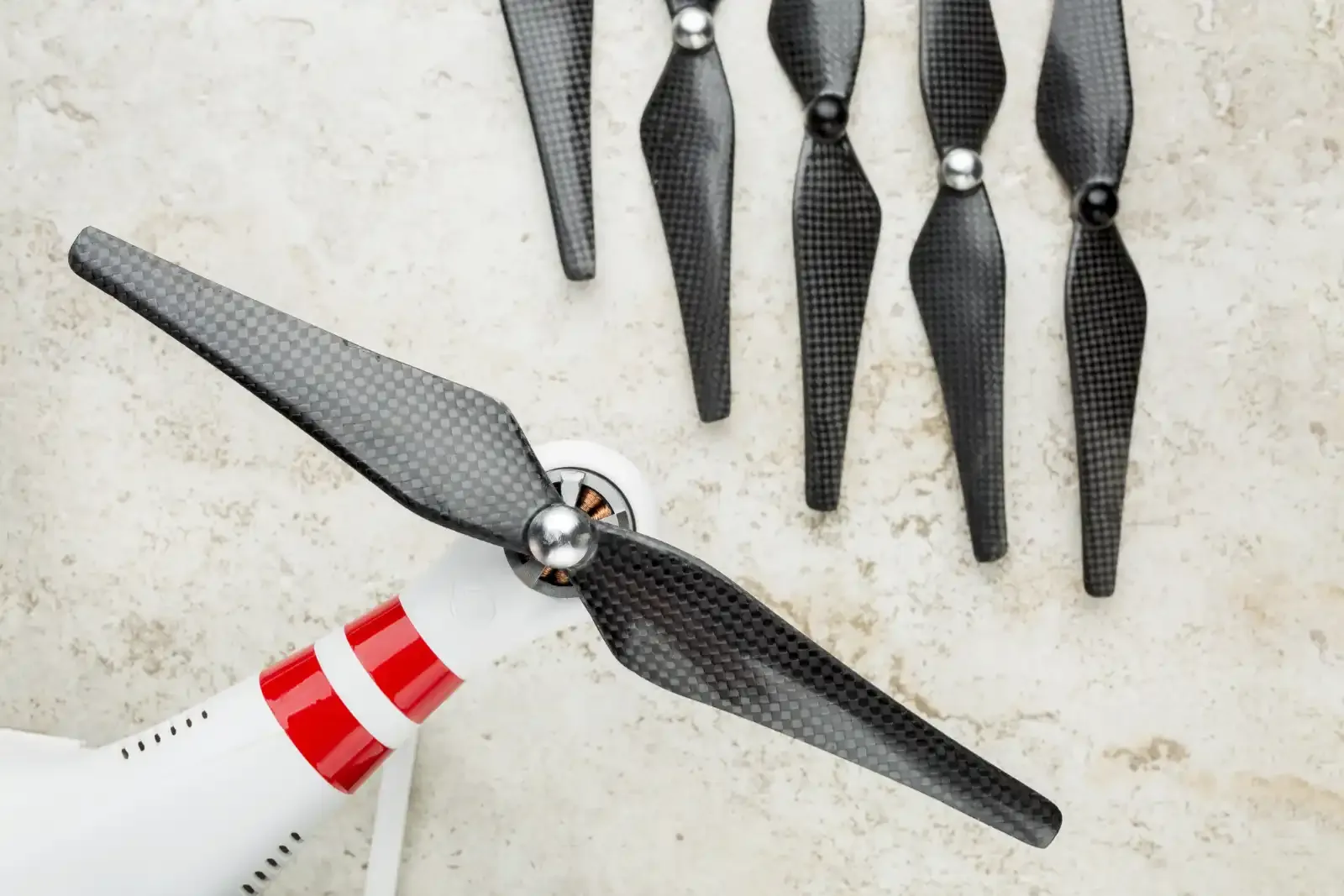
China tightened export licensing on heavy drone motors, speed controllers, propellers and autopilots this week, effective November 18. The same week, reporting on Ukraine showed it still relies on China for battery cells, thermal optics and motor materials, and already buys flight controllers, batteries, motors and cameras from Taiwan. Beijing's new rules could send more European and Ukrainian buyers to Taiwanese suppliers. At home, a defense budget document showed the navy planning 280 shipborne VTOL drones on top of the Coast Guard's 12, and a reported reorganization would put the army's drone units under its artillery commands. A commentary in East Asia Forum argued that Taiwan is buying drones faster than it is building the doctrine, integration and training to use them. Thunder Tiger is now citing a longer range for its PD-136 strike drone than it gave after the first flight test. Here's the week.
1. China adds heavy drone motors, ESCs, props and autopilots to its export license list
新華社 (Xinhua) — Oct. 19, 2026 · Read announcement · DroneXL — Oct. 19, 2026 · Read article
China's Commerce Ministry, customs administration and the Central Military Commission's Equipment Development Department issued Announcement No. 49 on October 19, revising export controls on drones and drone parts from November 18. The motor entry, 9A901, covers brushless drone motors that meet all four thresholds: 48 volts or more, 3 kilowatts or more, at least 3 kilowatts per kilogram, and 3,000 rpm or less. Matching speed controllers are included. The list also covers drone autopilots, turbojet engines with 400 newtons of thrust or more, carbon-fiber propeller blades, radios above set power levels or able to control more than 10 drones from one station, and flight control, autonomous navigation and swarm control technology. The ministry eased controls on some low-sensitivity civil drones and offers general licenses to exporters with a compliance program and stable end users. The motor thresholds catch heavy-lift and agricultural motors, not the small motors in typical FPV drones. Buyers of parts above these thresholds will depend on their Chinese suppliers getting licenses, which could slow deliveries of spares. DroneXL reads the notice together with China's August announcement and concludes that shipments to the US will face case-by-case review; the ministry has not said so.
2. Ukraine still depends on Chinese parts, and buys some from Taiwan
RFE/RL — Oct. 22, 2026 · Read article
RFE/RL reports that China accounted for 28 percent of Ukraine's direct drone imports at the end of August, according to Ukrainian customs data, down from near-total dependence in 2022. Ukraine still relies on China for thermal camera sensors and lenses, battery cells, electric motor materials and some microelectronics, and analysts told RFE/RL that alternatives exist but not in the quantities needed. Citing Taiwan's DSET, the article says Ukrainian companies use Taiwanese flight controllers, batteries, motors, cameras and other microelectronics, and that their interest has widened to sensors, single-mode optical fiber and jet engines. It names Thunder Tiger as having sent drone systems to Ukraine for field testing, and Kunway Technology as exporting two models to Ukraine via Poland. Taiwan exported about 242,000 drones in the first half of 2026, per the economics ministry, while Ukraine built and deployed nearly 2.5 million. Of Taiwan's first-half drone exports, 93 percent went to Poland and the Czech Republic. DSET analysts note that customs data records the declared destination, not the end user, so the share reaching Ukraine is an estimate from industry interviews. Our Export Tracker follows the same destination data.
3. Navy budget names V-BAT for 280 shipborne drones but plans an open bid
Taipei Times — Oct. 18, 2026 · Read article
The defense ministry's fiscal 2027 budget report shows the navy planning to spend NT$36 billion over four years on Project Yuan Hsiao (遠鴞) for 280 shipborne VTOL drones, 140 control systems and 82 ground transport vehicles. Of the drones, 212 are earmarked for the Coastal Combat Command and Hsiung Feng anti-ship missile units, so missile units can keep finding targets if they relocate or lose their radars. According to the Taipei Times, the ministry's report names the drones as Shield AI's MQ-35A V-BAT, compares the order with V-BAT's existing fleets and cites its record in Ukraine. The navy, however, says the contract will be openly bid. Shield AI told the paper it hopes to win, and at a Taipei briefing on October 2 it said AIDC would handle local logistics, maintenance and training. If V-BAT is chosen, the order alone would exceed the 250 the ministry report says Shield AI had sold to the US and NATO countries as of 2024. Together with the Coast Guard's 12 V-BATs, delivery of which began last week, the two programs come to NT$37.2 billion, and the navy has not yet chosen a supplier.
4. Reported reorganization puts army drone units under artillery commands
Taipei Times — Oct. 24, 2026 · Read article
The Taipei Times, citing an unnamed defense official, reports a reorganization meant to replace troop numbers with firepower. Drone units are to be folded into corps-level artillery headquarters, which would link reconnaissance and strike drones, tube artillery and missile systems in a digital targeting chain. Army UAV battalions are to field FPV and reconnaissance drones from NCSIST alongside Anduril's Altius-600M; the Altius-700M and Altius-600ISR order the report mentions is the contract for 1,554 and 478 units signed in August. The navy's Coastal Combat Command plans a fourth coastal combat group, each with its own UAV unit flying VTOL drones that have yet to enter service, which matches the navy program in item 3. The Air Force security force is to grow to a brigade to protect radar sites and air bases against drones and special forces, and conscript training is to add counter-drone work. The plan sets out force structure, not purchases, but it indicates which commands will buy drones and what types.
5. Commentary: Taiwan is buying drones faster than it is building the system to use them
East Asia Forum — Oct. 22, 2026 · Read article
In an East Asia Forum commentary, Aswin Lin of the East Asian International Relations Caucus argues that Taiwan's drone purchases are running ahead of the doctrine, command-and-control integration and training needed to use drones in large numbers, and that procurement politics favor buying equipment over that less visible work. He cites the Altius-600M chargers missing from the US sale, which we covered in September, and the higher unit cost of US-supplied drones compared with Ukrainian or Chinese ones. He also cites Tron Future's counter-drone system, which Defense Minister Wellington Koo has said failed three acceptance tests on a project of about US$30.7 million; Koo has said the government will impose penalties and terminate the contract. Lin notes opposition allegations that Koo's wife, former economics minister Wang Mei-hua, recommended the supplier, which Koo denies. His proposals are milestone-based payments, independent acceptance testing, confidential reporting to the legislature, and buying proven systems at scale before moving to more capable domestic platforms. The piece puts Taiwan's target at about 100,000 drones by 2028, while the defense ministry's published tender covers 48,750 domestic military drones for 2026 and 2027, and officials have cited around 200,000 uncrewed systems overall. The reorganization in item 4, which ties drones into artillery targeting, is an example of the integration work Lin says is missing.
6. Thunder Tiger's PD-136 gains a longer stated range after AUSA
South China Morning Post — Oct. 21, 2026 · Read article · Army Recognition — Oct. 2026 · Read article
Thunder Tiger showed the PD-136, the catapult-launched one-way attack drone covered in our October 5-11 roundup, at AUSA in Washington, and the SCMP gathered analysts' views on how Taiwan might use it. Some see more value against PLA forces in a landing, others against airfields and ports on the mainland. Thunder Tiger's October 5 release gave a planned range above 300 kilometers with a 10 to 15 kilogram payload, while reports from the AUSA display give 500 kilometers. Army Recognition notes that figure is a stated target, not something the October test confirmed. The company has not published the drone's guidance or its resistance to jamming. Until Thunder Tiger publishes test results, the range is a design goal.
That's the week. Watch for how China's licensing works in practice after November 18, whether Taiwanese motor and ESC makers report new inquiries from Europe and Ukraine, and who bids for the navy's VTOL drone program.
Sourcing drones or components from Taiwan?
Tell us what you need — we match it to verified Taiwan-based manufacturers and make the introduction. There's no charge to submit a request.
Source these components from Taiwan →Taiwan Drones Weekly News Roundup: October 12 - 18, 2026
Oct 18, 2026
US defense firms agreed this week to move some production into Taiwan, from Coas...
Why Taiwan's Origin Prosecutions Matter to Foreign Drone Buyers
Oct 15, 2026
Two Jiin Ming Industry executives are detained over alleged Chinese chips and le...
Taiwan Drones Weekly News Roundup: October 5 - 11, 2026
Oct 11, 2026
Taiwan’s economics ministry more than doubled its drone R&D grants this week and...