
Could Taiwan's US Supplier Parks One Day Include Drone Makers?

October 19, 2026
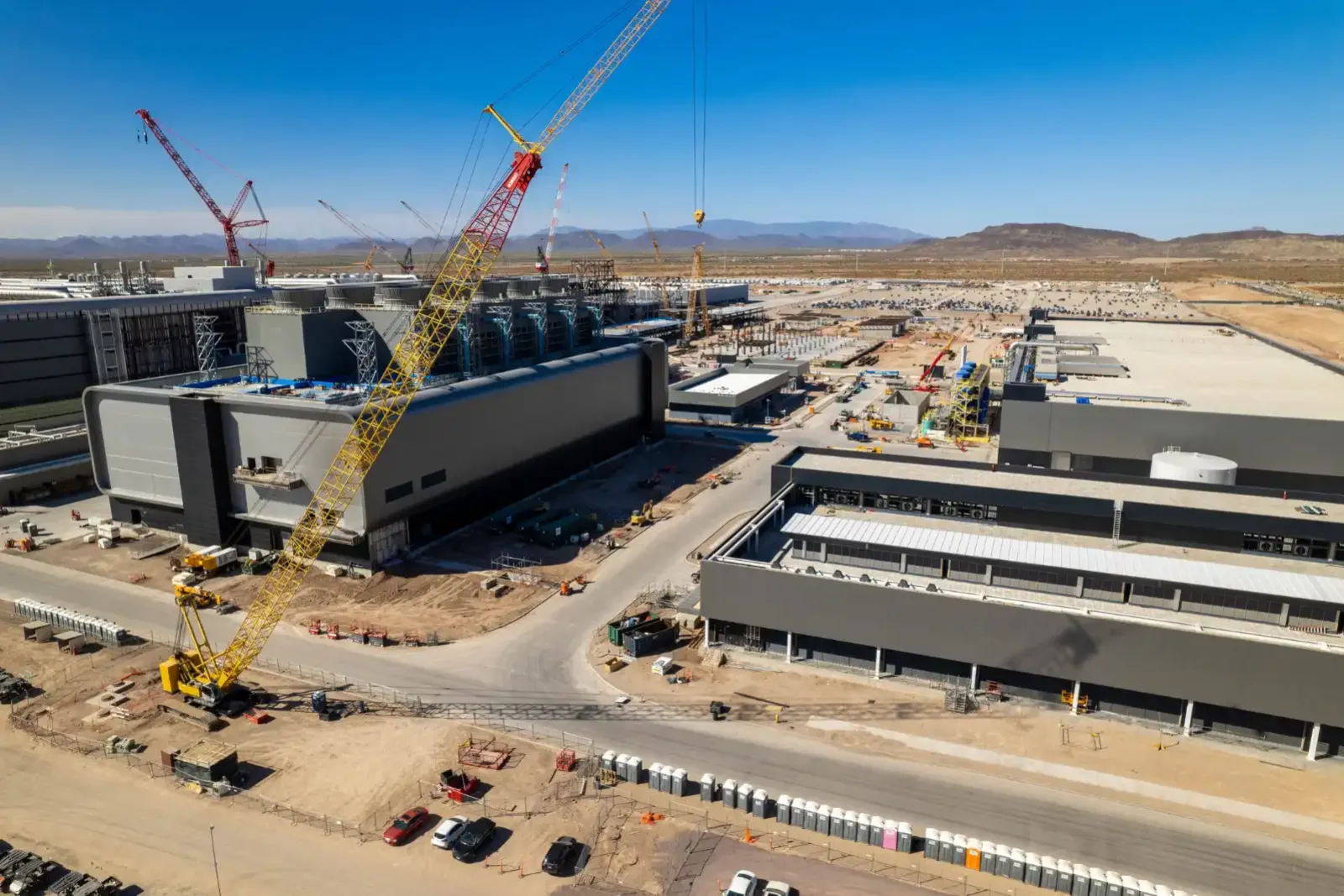
Taiwan plans industrial parks in the US to help the smaller suppliers of its chip and AI server makers set up there. Drones are not part of the plan. Taiwanese drone component makers face a similar problem: US rules increasingly require production in the US, and few of them can afford it.
Taiwan's first US industrial park will be in Texas, with construction costs of up to NT$129.8 billion (US$4 billion), Economics Minister Kung Ming-hsin (龔明鑫) told Bloomberg this week, according to Taiwan News. The Ministry of Economic Affairs says further details will follow. Nothing announced so far includes drone makers.
US rules are moving from requiring non-Chinese parts toward requiring parts made or assembled in the US. Taiwanese drone suppliers that sell to American buyers are increasingly expected to produce there. For most of them a US operation is not economic today. Support like that planned for AI suppliers could change that, if drone demand grows enough to justify it.
What the park model offers
TSMC and Foxconn can fund their own US plants. The smaller Taiwanese firms that supply them with packaging substrates, cooling modules and other equipment often cannot. The government plans to offer those firms credit guarantees on loans and help with US federal and local authorities on visas and land acquisition. People familiar with the plan say land in Texas has already been secured, and each later park is expected to cost between NT$64.9 billion and NT$129.8 billion, Taiwan News reported, citing CNA and Anue.
The plan follows the "Taiwan model" industrial clusters set out in the Taiwan–US investment memorandum. In October 2025 Kung named Arizona and Texas as candidate hubs for semiconductors and servers, per China Times. In May 2026 the ministry opened a Phoenix trade and investment center to work alongside the existing one in Dallas. Kung has also described the approach as flexible, adapted to what each host country offers in land, utilities and administrative support, according to UDN.
Taiwan's largest chip and server makers are already producing in the US. The parks are meant to bring their suppliers alongside them.
Why it doesn't fit drones today
Taiwan's drone output was NT$12.9 billion in 2025, and the Ministry of Economic Affairs targets NT$20 billion this year. The first Texas park alone is budgeted at NT$129.8 billion, about ten times last year's output. The AI server supply chain has the volume to justify shared infrastructure on that scale. The drone industry does not.
The drone industry also lacks an anchor customer. No Taiwanese drone manufacturer produces at scale in the US with suppliers that need to be near it. A Taiwanese component maker with a US site would sell to American airframe makers, many of them venture-backed startups. As we reported on October 1, people inside the program say some of these startups are selling to the Pentagon below cost, on order sizes the program describes as projections. The larger US funding they are counting on depends on a reconciliation bill that has not passed.
Most firms in Taiwan's drone supply chain are motor, electronics, machining or composites companies, and drones are one product line among several. As we noted in September, a supplier whose engineers are busy with larger, steadier customers may reasonably put drone orders second, and some have declined foreign inquiries for that reason. A US plant for a drone line is a much larger commitment than an evaluation order.
Most of Taiwan's drone exports currently go to Ukraine through Poland and the Czech Republic, as our Export Tracker shows. A park in Texas does nothing for that market, where EU content rules apply.
US rules favor US production
US rules increasingly test where a drone part was made, not only what is in it. Two of them offer relief to companies that commit to US production.
| Date | Rule | What it means for a Taiwanese supplier |
|---|---|---|
| Dec 22, 2025 | FCC adds essentially all foreign-produced drones and critical components, including flight controllers, radios, cameras, navigation, motors and batteries, to the Covered List | Taiwan is included; the test is where the part was produced, not its Chinese content. New products need Blue UAS listing or a Conditional Approval, which requires a US manufacturing plan |
| Jan 1, 2027 | DFARS magnet restriction extends from mine to finished magnet and flows to subcontractors | A Taiwanese motor with Chinese-origin magnet material cannot go into a US defense purchase |
| Feb 2027 | Drone Dominance Phase III: US final assembly mandatory | A complete Taiwanese drone is out; a Taiwanese part inside a US-assembled drone stays in |
| Feb 9, 2027 | Section 232 duties on drone components take effect (complete drones have been dutiable since Sep 3, 2026) | Taiwan-origin products capped at 15% if the importer certifies substantially all critical components come from the US or allied countries; an accepted onshoring plan earns a 0% rate |
| Aug 2027 | Drone Dominance Phase IV: non-Chinese magnet production and winding | Motor requirements tighten further |
In defense procurement a Taiwanese component still qualifies: Taiwan is not a covered country at any phase of Drone Dominance. The commercial channel is harder. Since December, a new Taiwanese flight controller, radio or motor cannot receive the FCC authorization it needs for the US market unless it is on the Blue UAS Cleared List or holds a Conditional Approval from the Department of War or Homeland Security. A Conditional Approval requires a time-bound plan to establish US manufacturing, with quarterly reporting to the US government. A supplier with no plans to produce in the US cannot meet that requirement. Parts the FCC has already authorized can still be sold, and equipment built exclusively for federal use falls outside the rule, but new products need authorization.
The Section 232 proclamation sets a 0% tariff for companies whose onshoring plans are accepted. Drone Dominance's preferred supplier tiers, which later become minimums, favor production in the US and the Western Hemisphere.
The US is also financing capacity to replace imported compliant parts. The Office of Strategic Capital has made a conditional US$820 million loan commitment to Performance Drone Works for component manufacturing. Unusual Machines reports building about 15,000 motors a month in Orlando. The Army's Tobyhanna depot has opened a brushless motor line rated at up to 500,000 a year, with magnets from Vulcan Elements. Taiwanese suppliers can charge a premium today because compliant supply is scarce, and this spending is meant to end that scarcity. Exporters will compete with the new US capacity; suppliers producing in the US would sell to the same buyers on the same terms.
India's defense acquisition rules also include a category for foreign manufacturers that produce locally through a subsidiary, joint venture or technology transfer. Kaohsiung-based Ahamani Advanced set up an Indian unit in 2023 to build drones, motors and batteries, and in January Indian bearing maker NBC Bearings agreed to take a 30% stake in it.
How assistance could change the economics
Two companies have already set up US production.
Thunder Tiger received a 1,520-drone Drone Dominance order through its US partner Farage Precision and reports a motor and key-component line already running in Ohio. As a listed company, it can fund that itself.
Gremsy, a Vietnamese gimbal maker, cleared three payloads onto the Blue UAS Cleared List in August through Gremsy USA, a separate US-incorporated company that engineers and builds the hardware in the US. As we noted in September, that structure also separates the US business from risks attached to the parent, an issue Taiwan's drone sector faced when GEOSAT was placed on a Chinese export-control list.
A motor, ESC or battery maker with a few dozen engineers would face the same costs: land, permits, visas for the engineers who set up the line, and financing a plant against orders from customers who may not last. The park model covers these with credit guarantees, help with land and visas, and government liaison with US authorities. A shared site could also let small suppliers share export compliance, testing and US customer support staff.
An FCC Conditional Approval and a Section 232 onshoring plan both commit a company to building in the US on a schedule. A small supplier would need financing and a site to meet that commitment, which is what a park would provide.
Support of this kind could make US production viable for suppliers whose business case is marginal, as it is for most Taiwanese drone component makers today.
What it would take
A drone version of the park model would need conditions that do not yet exist. US demand would have to firm up, through passage of the larger Drone Dominance and Defense Autonomous Warfare Group funding and follow-on production awards to vendors that need compliant parts in volume. More Taiwanese suppliers would have to commit engineers and capital to the US market. And the parks would be organized around the US airframe makers that drone suppliers sell to, rather than a Taiwanese manufacturer.
The AI parks show Taipei will share the cost of moving small suppliers abroad when their customers are large. Drone customers are not yet that large, but US production requirements for drone components are increasing.
What we're watching
- Whether the Ministry of Economic Affairs, when it publishes details of the Texas park, defines eligibility narrowly around semiconductors and AI or leaves room for other sectors.
- Whether Thunder Tiger expands its Ohio operation or brings Taiwanese suppliers with it.
- Whether any Taiwanese drone component maker sets up a separate US entity on the Gremsy model.
This platform matches buyers with Taiwanese suppliers and has an interest in this argument; readers should weigh it accordingly.
Sourcing motors, batteries or speed controllers from Taiwan? Start a sourcing request.
Sourcing drones or components from Taiwan?
Tell us what you need — we match it to verified Taiwan-based manufacturers and make the introduction. There's no charge to submit a request.
Source these components from Taiwan →Non-Red Is a Requirement, Not a Label: Why TaiwanDrones.com Is Asking Suppliers for Documents Instead of Declarations
Oct 9, 2026
We planned to launch a China-Free verification program with our supplier directo...
What Taiwan Offers Drone Component Buyers Besides Non-Chinese Origin
Oct 5, 2026
Non-red gets a Taiwanese part considered, and competitors elsewhere can claim it...
Who Pays for Drone Dominance, and Who Gets Paid
Oct 1, 2026
Venture-backed startups absorb the losses. The margin goes to whoever makes the...