
Tighter Rare Earth Controls Could Push Back Taiwan’s Drone Timeline

November 20, 2026
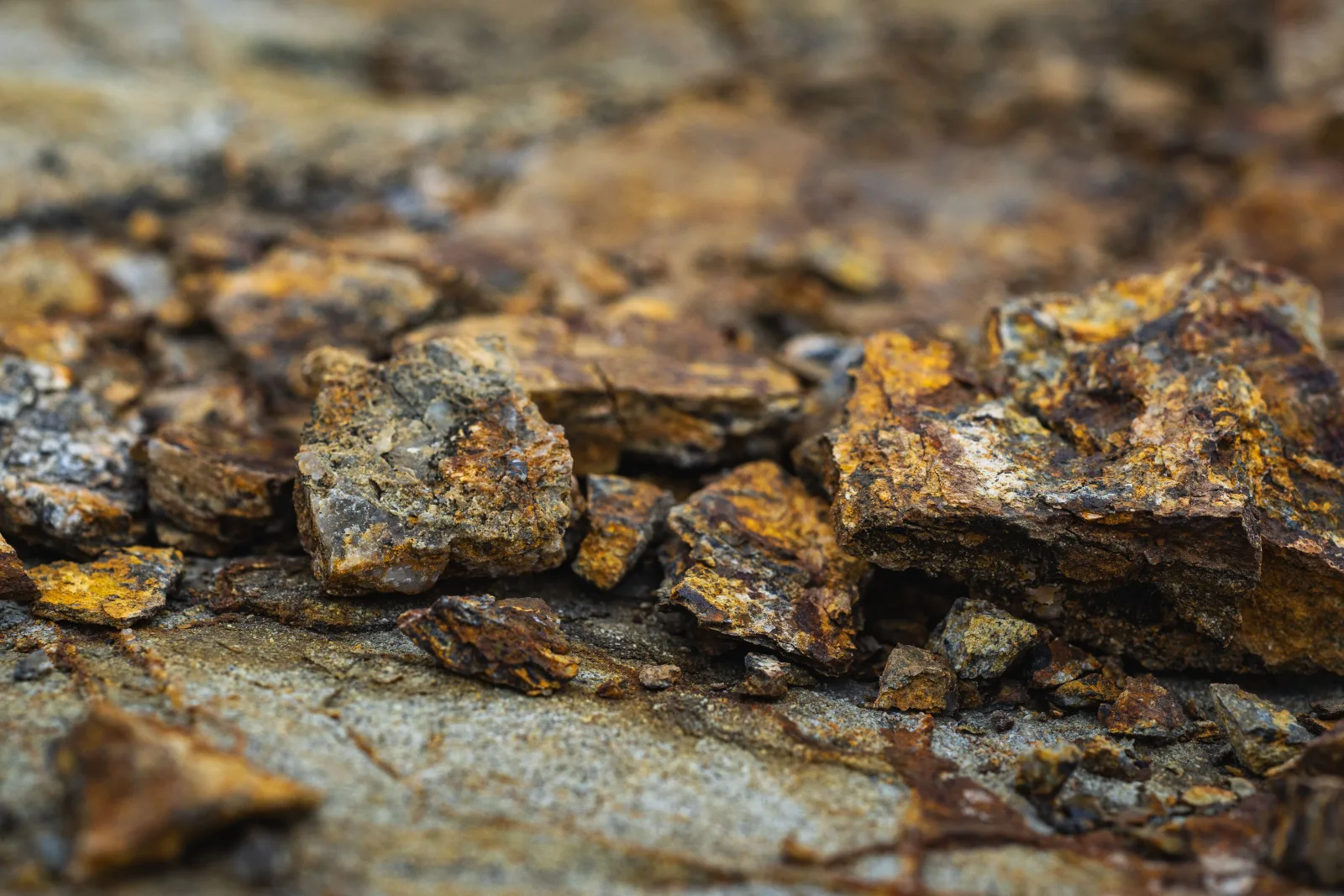
On November 9, China's Ministry of Commerce extended its pause on the rare earth controls it announced in October 2025 by two months, to January 10, 2027, Commercial Times reported. The pause is partial. The April 2025 licensing regime on samarium, gadolinium, terbium, dysprosium, lutetium, scandium and yttrium remains in force, and since November 18, Beijing's revised drone export rules put large brushless motors and their speed controllers under license as well. For Taiwan's drone makers, Chinese control now reaches from the element to the magnet to the finished motor.
Taiwan's drone strategy assumes the island can build at volume without Chinese parts. The motor is where that assumption is weakest. In 2024, Taiwan imported 1,924 tonnes of permanent magnets and magnetized materials, 95.3 percent of them from China, according to customs data compiled by Chung-Hua Institution for Economic Research assistant research fellow Tai Cheng-hsun in an analysis for the Chinese National Association of Industry and Commerce. The question for Taiwan's drone industry is not only whether it can find non-Chinese magnets. It is whether it can build a sustainable non-Chinese motor supply chain that meets requirements on price, quality, volume and delivery time. Taiwanese makers can still buy magnets; the risk is that supply meeting all four conditions arrives later than the procurement and export plans built on it assume.
Two caveats belong at the top. First, the price figures below are Argus Media spot assessments, not contract prices for finished magnets, which move more slowly. Second, most of the evidence on delays comes from company disclosures and broker research. A company preparing a listing and an investment house selling coverage both have reasons to frame supply risk in a particular way, and we treat their numbers as indicative rather than audited.
The bottleneck is the refinery, not the mine
The clearest statement of where Beijing's leverage sits came early. In April 2025, days after the first round of controls, Taiwan's Institute for National Defense and Security Research (INDSR) published a short assessment by researcher Ho Tseng-yuan. His starting point was that rare earths are not scarce in the earth's crust and that ore is spread across the US, Australia, Brazil, India and South Africa. What China holds is midstream processing technology and the patents around it: the separation and refining steps that turn mixed ore into usable oxides and metals.
Nineteen months on, that diagnosis still holds, and the data make the point by getting more concentrated the further downstream you go. China mined about 69 percent of the world's rare earths in 2025, according to USGS figures cited by Commercial Times. The IEA puts its 2024 share of refining at 91 percent and of sintered permanent magnet production at 94 percent. For heavy rare earths, the Center for Strategic and International Studies has put China's share of processing at about 99 percent as of 2023.
Prices now show what a refinery chokepoint looks like from the buyer's side. Outside China, yttrium trades at up to 125 times the domestic Chinese price, roughly US$1.15 million a ton in Europe against US$9,144 in China; dysprosium sits at 20 times and terbium at 8 times, according to Argus data in a Bloomberg report carried by United Daily News. Before the controls, overseas prices were only slightly above domestic ones. The ore did not get scarcer. Access to processed material did.
Dysprosium and terbium are the elements that matter most for drones. Neodymium iron boron magnets are the standard material for high-efficiency motors, and where a motor runs hot, under high load or at high speed, magnet makers add heavy rare earths such as dysprosium, as ITRI materials researcher Tsao Shen told CNA. That describes the heavy-lift and long-range propulsion class. Both elements sit on the April 2025 list, which none of Beijing's pauses has touched.
Autonomy is a lifecycle problem
The most useful part of the INDSR piece is its argument that defense autonomy cannot be measured at the point of supply. Ho described a pattern Taiwan has met before: foreign suppliers sell key materials in small quantities to research units, then restrict supply once mass production is planned. Even with the material in hand, he wrote, weapons production needs specialized equipment matched to that material's properties. His conclusion was that real autonomy means domestic control over every stage: key materials, design, manufacturing, assembly, test and evaluation, deployment and retirement.
Beijing's moves, before and since, map onto that list almost layer for layer.
The process. China had already banned exports of rare earth extraction and separation technology, and in December 2023 it added magnet manufacturing technology to the ban.
The equipment and the foreign product. The October 2025 package extended controls to five more elements, to related processing equipment and technology, and to some foreign-made products containing Chinese material. That package is what the November 9 pause covers, and only until January 10.
The finished motor. Under Announcement No. 49, published October 19 by the Ministry of Commerce, the General Administration of Customs and the Central Military Commission's Equipment Development Department and in force since November 18, a brushless motor specially designed for mounting drone propellers needs a Chinese export license if it meets all of the following: rated voltage of 48 volts or more, rated power of 3 kilowatts or more, rated power density of at least 3 kW/kg, and rated speed of no more than 3,000 rpm. Electronic speed controllers specially designed for use with those controlled motors also require an export license if they meet both of the following: rated voltage of 48 volts or more and rated power of 3 kilowatts or more.
Put together, a Taiwanese motor maker that buys Japanese magnets still has to confirm that its magnet process, raw material sources and technology sources meet non-Chinese supply chain requirements. In particular, if it uses controlled rare earth materials of Chinese origin, or magnet manufacturing technology of Chinese origin, it may be affected by China's extraterritorial export controls in the future. Ho's warning about the gap between research quantities and production quantities also applies to drones. Obtaining small quantities of material at the R&D stage does not mean the same supply terms will hold in volume production. As some Taiwanese drone programs scale up their purchasing, material sources, prices and delivery capacity will face a more practical test.
Where the timeline slips
The delay is not hypothetical. It has already shown up once, and the conditions that caused it have tightened since.
Magnet supply broke first in 2025. Fukuta Electric & Machinery saw magnet deliveries disrupted by export controls from April 2025 and turned to Japanese and Malaysian sources, according to broker research summarized by Wantrich in October 2025. The research judged that those sources could support Fukuta's 2025 output but that, if the controls persisted, the pace of its drone capacity expansion in 2026 would slow. It also judged that Taiwan's traditional defense programs already ran on non-Chinese rare earth supply and would see little impact, while drone supply chains were still being built.
Workarounds cost time. In July, Fukuta said it would stop using Chinese rare earth materials from this year and phase them out of its motor products, buying Japanese magnets through a partnership with a major Japanese company and running a joint lab with China Steel on a rare earth free motor, Economic Daily News reported. It was adding a third line to what it calls Taiwan's largest drone motor production base, lifting annual capacity from 80,000 to 300,000 units. The broker research listed the other options: non-Chinese capacity, reformulating magnets to avoid controlled elements, or importing semi-finished magnets. Each one resets part of a qualification cycle.
Our sourcing desk sees the same gap, below Fukuta's scale. Fukuta's switch rests on purchasing volume and a long-standing Japanese partner that a twenty-person motor specialist does not have. When we looked at foreign requests to Taiwanese suppliers in September, motors with non-Chinese magnets were not available for new orders. Taiwanese motor makers told us in October that non-Chinese magnets may reach them at the end of this year or early next year at the earliest, and that even that is uncertain, as we reported in our analysis of China's drone motor licensing.
Japan is the workaround, and Beijing is squeezing it. Japan matters to Taiwan because it is where Taiwanese motor makers have turned. On January 6, 2026, China imposed export restrictions on Japan, and its exports of controlled rare earth materials to Japan fell from 1,015.4 tonnes in the 10 months before the Busan agreement to 325.6 tonnes in the 10 months after, a decline of about 68 percent, according to a CSIS report published November 10 by Gracelin Baskaran and Max Martin. China's September yttrium oxide exports to Japan were down about 92 percent year on year, Commercial Times reported. The squeeze lands on Japanese magnet makers' inputs: Proterial, Shin-Etsu and TDK all depend on Chinese rare earth oxides, metals and magnets, according to Benchmark Mineral Intelligence. A Japanese magnet bought by a Taiwanese motor maker does not need a Chinese export license on its way to Taiwan, which is why it works as a workaround. But its supply depends on Chinese feedstock that Beijing is rationing to Japan, and it may still contain Chinese-mined or Chinese-separated material, which matters under the US rules below.
The pattern is selective, not general. The same CSIS report found that comparing the 10 months before Busan with the 10 months after, through August 2026, China's total exports of controlled rare earth materials fell only 2.5 percent, but exports to the US and Japan together fell 58 percent while exports to other countries rose nearly 146 percent. In the 11 months after Busan, from November 2025 to September 2026, the US imported an average of 19.3 tonnes a month of rare earth compounds and metals from China, almost 75 percent below the average of 76.8 tonnes a month from June 2024 to March 2025. In February 2026, two North American suppliers of aerospace coatings temporarily suspended production for lack of yttrium. An earlier CSIS report, published April 27, found that China exported 17 tonnes of yttrium to the United States from April to December 2025, against 333 tonnes in the eight months before the controls. Beijing is deciding who gets supply, and Taiwan's main workaround runs through one of the two markets it is squeezing hardest.
US sourcing rules run on their own calendar. From January 1, 2027, the US defense restriction on neodymium iron boron and samarium cobalt magnets extends from where a magnet is melted and produced to the whole chain, including where its raw material was mined, refined and separated. Section 848 of the FY2026 National Defense Authorization Act applies that expanded restriction to contracts entered into on or after January 1, 2027, according to Pillsbury. Existing contracts are less tidy. The clause most of them carry, DFARS 252.225-7052, keys the expanded restriction to delivery date, so a 2027 delivery under an older contract can be caught. A class deviation clause, DFARS 252.225-7961 (June 2026, issued in July under Revision 1 to Class Deviation 2026-O0041), ties it to award date instead, but Pillsbury notes that existing contracts must be amended to adopt it and that restrictions on covered-country melting and production still apply. The rules contain exceptions, including one for certain commercially available off-the-shelf items subject to a weight-based limit, and waivers are getting harder: Executive Order 14415, signed July 20, 2026, directs the Pentagon to stop issuing nonavailability waivers for covered materials from January 1, 2027, except where a contractor submits a mitigation plan that the Secretary accepts. US industry says domestic capacity and certification still have gaps that may force some contractors to seek waivers anyway, according to Commercial Times. For Taiwanese suppliers, the practical point is the Japan problem above: a Japanese magnet made from Chinese-separated material solves the Chinese licensing question but not necessarily the US one. Which rule applies to a given drone motor depends on the contract clause, the award date and how the item is classified, and suppliers should confirm it with the prime contractor, the contracting officer and counsel rather than assume an exception.
Outside supply stays tight. Project Blue's research director told Bloomberg, in the same report carried by United Daily News, that rare earth supply available outside China will be very limited for one to two years and that the price gap will likely persist for at least several years.
On November 17 in Manila, US President Donald Trump said the United States would catch up with China on rare earths within 10 months, the South China Morning Post reported. Experts quoted in the same report disagreed. Jack Lifton, co-chair of the Critical Minerals Institute, said the US would not catch up with China in rare earth production, processing or the manufacture of rare earth enabled products in 10 months or in 10 years, and that building a complete US supply chain would take "another generation." David Abraham, principal at Materium Strata, said he did not expect the US to secure a reliable supply chain within the next year. According to the report, US rare earth mine production rose 12 percent to an estimated 51,000 tonnes in 2025, while China accounted for 71 percent of US imports of rare earth compounds and metals from 2021 to 2024 and is the sole source of US imports of several heavy rare earths.
Taiwan's own pipeline is still at the starting line. ITRI said in November 2025 that it planned to begin transferring rare earth extraction and recycling technology, focused on neodymium and dysprosium, to private manufacturers in 2026; as of August no recipient had been named, as we reported in our August 24 analysis. CNA reported on October 24 that ITRI also plans a rare earth demonstration plant with a planned capacity of 500 metric tons a year, roughly a hundredfold increase over its current experimental line of about 5,000 kilograms a year, according to ITRI President Chang Pei-zen. Construction is targeted for completion by the end of 2028, followed by process refinement to reach planned output by the end of 2030, at which point Chang said the plant could meet half of Taiwan's rare earth needs. The plant is still on the drawing board, its funding would need to be budgeted by the National Science and Technology Council, and it would eventually be transferred to a private company. It is a materials plant; the report notes only that some equipment for making high-end magnets sits at ITRI's southern campus in Tainan. Separately, in June the Metal Industries Research & Development Centre signed an MOU with Japan's Aichi Steel on injection molding for light rare earth magnets, aimed at robots and unmanned vehicle motor rotors, according to Economic Daily News. The Ministry of Economic Affairs has said it will fund rare earth technology, recycling and diversified procurement, according to a November 17 report. These are lab and pilot steps, not volume.
We assess the delay risk through 2027 as considerable for Taiwanese drone programs that require motors with fully non-Chinese magnets, particularly in the heavy-lift and long-range classes. That judgment depends on keeping three capabilities apart: the supply of rare earth materials, the supply of finished magnets, and the volume production of drone motors. ITRI's planned plant addresses the first, on a timeline that runs to the end of 2030. The second still depends largely on Japanese and other non-Chinese magnet makers, whose own inputs come substantially from China and are being rationed. The third depends on both, as well as on qualification and line capacity at motor makers such as Fukuta. The basis for the judgment is the 2025 precedent at Fukuta, Beijing's targeting of Japan, the 2027 US sourcing rule, outside supply that independent analysts expect to stay limited for one to two years, and a domestic pipeline that has not yet reached technology transfer. Three factors could reduce the risk: Japanese magnet makers have already absorbed some Taiwanese demand; small FPV-class motors can often use grades without heavy rare earths; and Beijing has paused controls before as part of trade deals with Washington, though none of those pauses has touched the April list.
Urban mining is the right bet, on a longer clock
Ho's policy answer fits Taiwan's position. The island has no rare earth deposits but growing demand from its semiconductor, electronics and energy industries. He proposed recovering metals from urban and industrial waste, commonly called urban mining, and called on the government to designate metal recycling as a priority industry. Several Taiwanese recyclers have since been named as candidates for a domestic rare earth effort, among them Chung Tai Resources, which already extracts yttrium and lanthanum from fluorescent lamp phosphor powder, as we noted in our August 24 analysis.
The direction is right, and the second argument explains why it is not sufficient on its own. Recycling produces feedstock. It does not supply the separation and magnet-making steps that Beijing has spent a decade restricting. A recycled magnet that has to be sent to China for reprocessing returns Taiwan to the same dependence. If urban mining is to meaningfully reduce dependence on Chinese supply chains, Taiwan still needs reliable domestic capacity for material processing, separation and magnet manufacturing, along with recycling technologies that can reuse magnet material directly. That is why ITRI's technology transfer and the MIRDC magnet work matter as much as the recyclers do.
Scale is the other limit. Against 1,924 tonnes of magnet imports in 2024, Taiwan aims to make only about a third of the magnets it needs by 2030, as we noted in our November 16 piece on suppliers suspected of using Chinese parts. Official targets have been stated at different points in the chain and on different timelines, from that magnet figure to ITRI's goal of meeting half of rare earth needs by the end of 2030, and they should not be read as one plan. Recycling volumes that match even a meaningful share of demand will take years to build, which is why we read urban mining as a 2028-and-beyond answer to a 2027 problem.
What we're tracking
January 10, 2027. Whether Beijing extends the pause on the October 2025 package again. The current date matches the US-China trade truce extension announced in September. If the pause lapses, controls on the five added elements, on processing equipment and technology, and on foreign-made products containing Chinese material return, and Taiwanese motors built around Chinese-processed magnets may be affected. On November 6, US Treasury Secretary Scott Bessent and Trade Representative Jamieson Greer pressed Vice Premier He Lifeng to implement the Busan commitments in full, particularly on rare earths. Trump met Xi Jinping on November 19 on the sidelines of the APEC summit in Shenzhen. The meetings ended with no apparent agreement to extend the trade truce that expires on January 10, and Trump did not raise rare earths publicly during the visit, Yahoo Finance reported. Even if the pause is extended, the CSIS data suggest Beijing will keep using licensing to decide who gets supply.
Japan. Whether China's restrictions on Japan ease or tighten, and whether Japanese magnet makers start allocating supply away from smaller export customers such as Taiwanese motor makers.
License behavior after November 18. Whether Taiwanese integrators buying Chinese motors above the 48-volt, 3-kilowatt thresholds report delays or refusals, and whether that pushes heavy-lift orders toward Taiwanese motor makers that cannot yet source non-Chinese magnets at volume.
Magnet contract terms. Whether Taiwanese motor makers sign multi-year non-Chinese magnet supply, at what premium over Chinese-sourced product, and whether the contracts document where the rare earth feedstock was mined and separated.
Industrial policy follow-through. Who takes ITRI's technology in 2026 and 2027, whether MOEA formally treats metal recycling as a priority industry, and whether any program funds a domestic magnet line rather than only recovery.
→ Subscribe to Taiwan Drone Weekly for ongoing coverage: www.taiwandrones.com/subscribe
→ Suppliers: contact us at info@taiwandrones.com
This analysis draws on reporting from Commercial Times, Al Jazeera, The Star, the South China Morning Post, Yahoo Finance, United Daily News, Economic Daily News, CNA and Focus Taiwan, Wantrich, Yam News, Xinhua and The Japan Times; on Argus Media price data as reported by Bloomberg; on Benchmark Mineral Intelligence; on the text of MOFCOM Announcement No. 49 (2026), DFARS 252.225-7052 and 225.7018-3, Executive Order 14415 and law firm commentary from Pillsbury; on CSIS reports of November 10, 2026 and April 27, 2026 on Chinese rare earth exports; on an April 24, 2025 assessment published by the Institute for National Defense and Security Research and an analysis by the Chung-Hua Institution for Economic Research published by the Chinese National Association of Industry and Commerce; on USGS, IEA and CSIS figures as cited by those outlets; and on TaiwanDrones' prior reporting. Risk assessments represent analytical judgment, not a forecast of specific policy or company outcomes. Nothing here determines whether any DFARS exception or deviation clause applies to a particular product or contract. This piece reflects public information as of November 19, 2026 and does not constitute legal, export-control or investment advice.
Sourcing drones or components from Taiwan?
Tell us what you need — we match it to verified Taiwan-based manufacturers and make the introduction. There's no charge to submit a request.
Source these components from Taiwan →Taiwan’s Domestic Drone Chips Are Coming. Can They Meet the Industry on Price and Volume?
Nov 7, 2026
Taiwan has named the drone chips it lacks, funded two rounds of development, and...
China Just Put Drone Motors Under License. Can Taiwan Move From Second Source to First Choice?
Oct 29, 2026
From November 18, high-power brushless motors and speed controllers need a Chine...
Taiwan's Drone Talent Gap Is a Global Problem With Local Causes
Oct 7, 2026
The US Army has the drones but not enough operators, and Ukraine and Europe lack...