
Taiwan Drones Weekly News Roundup: October 26 - November 1, 2026

November 1, 2026
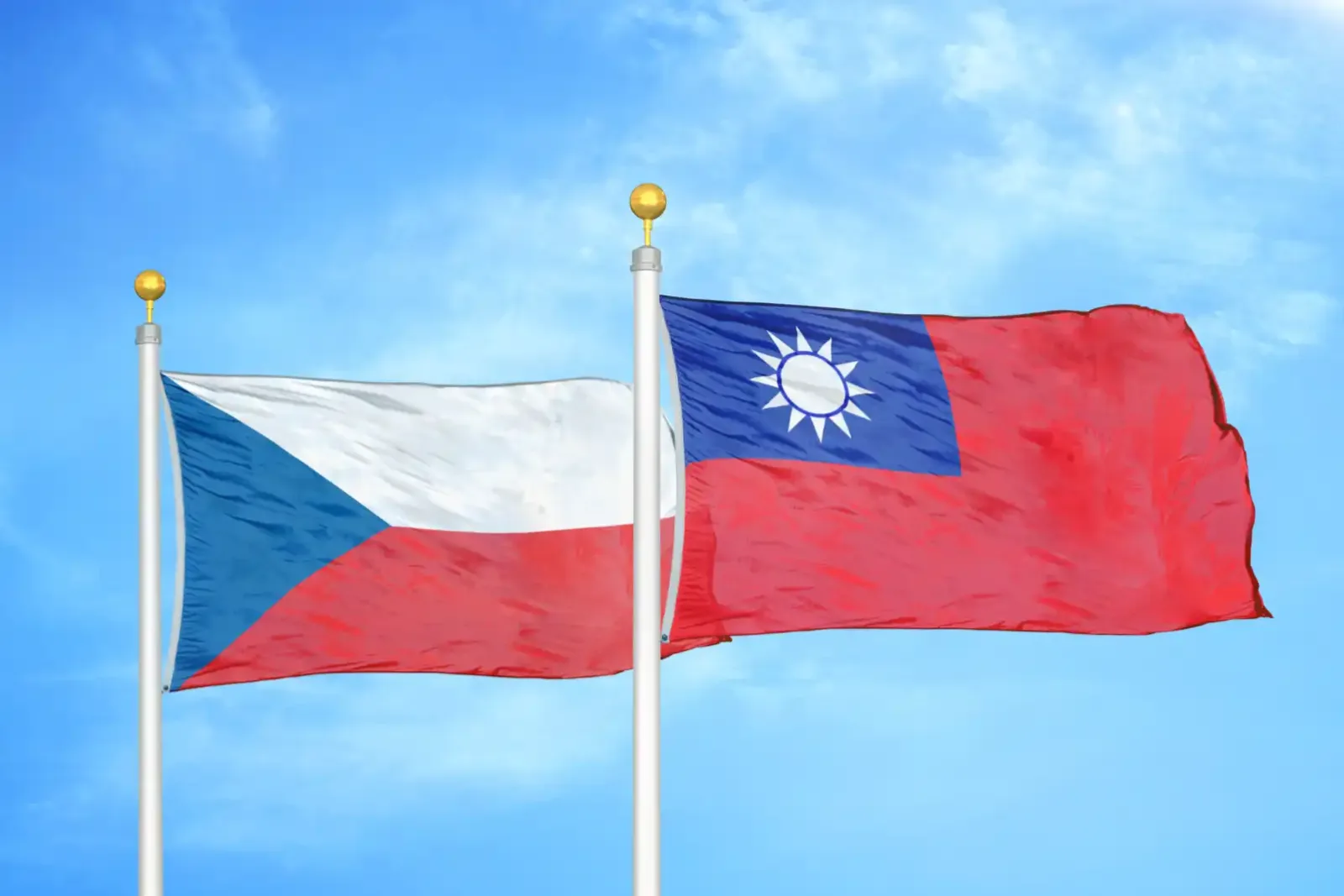
Prosecutors detained Align's chairman and deputy general manager this week over Chinese-made chips found in drones supplied to the military, the third origin prosecution of a Taiwanese drone supplier since August and the best-known company yet. The same week, Vice President Hsiao Bi-khim set a goal of a 100 percent non-red supply chain at the Global UAV Academy's forum in Taipei, where a former Czech parliamentary speaker said Czech drone makers want assembly lines in Taiwan. At his company's launch, AerosoarX chairman Max Lo signed with two US firms and made a more cautious case: reduce Chinese dependence gradually, link by link, and spread production across several countries so a blockade cannot stop it. The Ocean Affairs Council reported that a university team it funds has finished simulating coordinated flights of 20 drones, all modeled on US airframes. Here's the week.
1. Align executives detained over Chinese chips in military drones
聯合新聞網 (UDN) — Oct. 30, 2026 · Read article · Focus Taiwan — Oct. 31, 2026 · Read article · 風傳媒 (Storm Media) — Oct. 30, 2026 · Read article
Taichung prosecutors have detained Align Corp. founder and chairman Tu Ta-sen (杜大森) and his wife, deputy general manager Huang Wen-li (黃文麗), and the court has barred them from communicating with others. The Taichung District Prosecutors Office confirmed to CNA that the two are accused of violating the National Security Act; UDN reports the specific counts are Articles 11 and 12, which bar knowingly delivering Chinese-origin products for military procurement, plus fraud, and that prosecutors suspect Align misstated the origin of parts to meet its contracts. The case started with an army unit in central Taiwan that bought Align drones for teaching and training. Inspectors took them apart during acceptance, found chips marked "CN" and referred the case to prosecutors. Investigators then took apart a second batch bought by an army unit and found suspected Chinese chips there too. In mid-October police and investigators searched Align and questioned six people, including Tu and Huang. Prosecutors say at least two military contracts, worth a combined NT$8 million or more, involved drones built with Chinese-made chips, and that they will trace the upstream suppliers and sources of the parts. The contracts banned products from China, Hong Kong and Macau. The case has already reached civilian agencies. On October 31 the Interior Ministry said the National Park Service and Central Police University each bought one Align drone in 2025 and that it would review those purchases under procurement rules. It also said the National Immigration Agency had awarded a NT$2.75 million contract this year, through open tender, to a Taichung company that planned to supply 30 Align drones. Those have not been delivered, and the agency says it will block delivery of Align drones or any product with Chinese-made parts. The ministry said all government drone purchases must meet non-red supply chain requirements and that it will seek compensation for contract violations. The immigration agency case shows the drones can reach government buyers through a reseller, not only from the maker. Defense Minister Wellington Koo said on October 30 that the military is still checking its inventory and will report once it has a result, and asked prosecutors to share concrete evidence. Align, founded in 1984 in Taichung's Fengyuan District, is best known for its T-REX remote-control helicopters, once about 70 percent of the global market, and regularly bids on drone contracts for the military, police and fire services. It is the third case since August, after Hang Jian Technology and Jiin Ming Industry, and the pattern is the same: Chinese parts found by taking drones apart at delivery inspection, not at sourcing. The contract values are small, but Align is a long-established, well-known supplier, which makes it harder to treat these cases as fringe vendors cutting corners. Our October 15 analysis sets out what the prosecutions mean for foreign buyers, and our component risk map covers where Chinese content tends to hide. The investigation is ongoing, no indictment has been filed, and Align had not commented in the reports we saw.
2. Hsiao sets a 100% non-red goal; Czech firms eye assembly in Taiwan
Taipei Times — Oct. 31, 2026 · Read article · Taipei Times — Oct. 31, 2026 · Read article · Radio Taiwan International — Oct. 30, 2026 · Read article
Vice President Hsiao Bi-khim set out three pillars for making Taiwan Asia's leading drone exporter to fellow democracies at the formal opening of the Global UAV Academy (GUAVA) in Taipei on October 30. The first is a fully non-Chinese supply chain, and she named the components it has to cover: microprocessors, flight control systems, electro-optical sensors and batteries, each meeting cybersecurity and integrity standards before the chain counts as trustworthy. The second is edge AI for autonomous platforms that can fuse sensors and navigate under GPS jamming. The third is international partnerships for joint R&D, technology transfer and co-manufacturing. GUAVA is a nongovernmental body funded by private donations that works alongside the foreign ministry's drone diplomacy task force. At the opening it signed memorandums with the Polish Chamber of Unmanned Systems and NCSIST, adding to earlier agreements with AUVSI, the Japan Drone Consortium and Palau Community College. Foreign Minister Lin Chia-lung and Deputy Defense Minister Hsu Szu-chien attended. At the same event, former Czech Chamber of Deputies president Markéta Pekarová Adamová, now in the defense industry, said Czech manufacturers want to set up drone assembly lines in Taiwan. She introduced four Czech firms with plans to work with Taiwanese industry: AVEC Systems, which makes autonomous interceptors and attack drones; Digitech Automotive, a software company moving into UAV navigation; JISER, a counter-drone maker; and Farpoint, which runs pilot training with GUAVA and is opening an office at the drone center in Chiayi. Twenty-four Taiwanese pilots have completed that training. DSET says the Czech Republic is the largest importer of Taiwanese drones and components, consistent with the destination data in our Export Tracker and the Poland-Czechia share covered in last week's roundup. Hsiao's component list is where the prosecutions in item 1 found Chinese parts, and where our component risk map says Chinese content is hardest to remove.
3. AerosoarX signs with Rajant and SiMa.ai; Max Lo argues for distributed production
Focus Taiwan — Oct. 28, 2026 · Read article · Focus Taiwan — Oct. 28, 2026 · Read article
AerosoarX, founded in April by Max Lo, who chairs the Taiwan National Drone Industry Association, signed memorandums with two US companies at its launch on October 28: Rajant for mesh networking and SiMa.ai for onboard AI processing. Lo said SiMa.ai's Modalix processor was the only option that met his target of 50 TOPS within the drone's power budget. AerosoarX sent staff to Rajant's Kentucky facility in September and is aiming for production readiness of a 15-inch AI-enabled FPV drone in November. Rajant said the collaboration has already sold drones to US Army and Navy research laboratories. Lo said AerosoarX supplies platforms and works alongside Rajant rather than acting as prime contractor, and his presentation named Phase III of the Pentagon's Drone Dominance Program as a 2027 target. His broader argument was about supply. Stockpiles decide only the first month of a war, he said, so Taiwan should set up production in several countries using shared assembly specifications and interchangeable parts, with Taiwan handling system integration and component kits and Vietnam and Malaysia as possible assembly hubs. He also said replacing Chinese suppliers is costly and favored reducing dependence gradually, starting with the most critical links, which is a slower path than the 100 percent goal in item 2. Our analysis of China's new motor export licensing and of US supplier parks for Taiwanese firms covers the same questions of where parts get made.
4. Ocean Affairs Council-funded team simulates coordinated flights of 20 drones
Focus Taiwan — Oct. 26, 2026 · Read article
The Ocean Affairs Council said on October 26 that it is funding a National Cheng Kung University team, led by associate professor Chueh Chih-che of the aeronautics department, to build a system that coordinates different types of drones for wide-area maritime surveillance. The team has completed simulations of two groups of drones, 20 in all, flying at the same time. The control software uses multi-agent reinforcement learning so drones can divide tasks and plan routes themselves, with formation control, obstacle avoidance and a minimum vertical separation of about 30 meters. The project models three US-made fixed-wing VTOL drones, the Jump 20, V-BAT and Flexrotor, two of which the Coast Guard already operates or is receiving, as covered in our October 5-11 and October 12-18 roundups. The next steps are hardware-in-the-loop testing, prototype integration and flights over the sea. Everything so far is simulation, and the council gave no schedule. It is the council's second funded autonomy project reported this month, after the uncrewed-vessel AI trial off Kaohsiung covered in the October 5-11 roundup.
That's the week. Watch for AerosoarX's FPV production readiness in November, whether any of the Czech firms announce a Taiwan facility, and the NCKU team's first flights over water.
Sourcing drones or components from Taiwan?
Tell us what you need — we match it to verified Taiwan-based manufacturers and make the introduction. There's no charge to submit a request.
Source these components from Taiwan →Taiwan Drones Weekly News Roundup: October 19 - 25, 2026
Oct 25, 2026
China tightened export licensing on heavy drone motors, speed controllers and pr...
Taiwan Drones Weekly News Roundup: October 12 - 18, 2026
Oct 18, 2026
US defense firms agreed this week to move some production into Taiwan, from Coas...
Why Taiwan's Origin Prosecutions Matter to Foreign Drone Buyers
Oct 15, 2026
Two Jiin Ming Industry executives are detained over alleged Chinese chips and le...