
Taiwan's Defense Budget Cuts: What the May 8 Vote Means for the Drone Industry

May 22, 2026
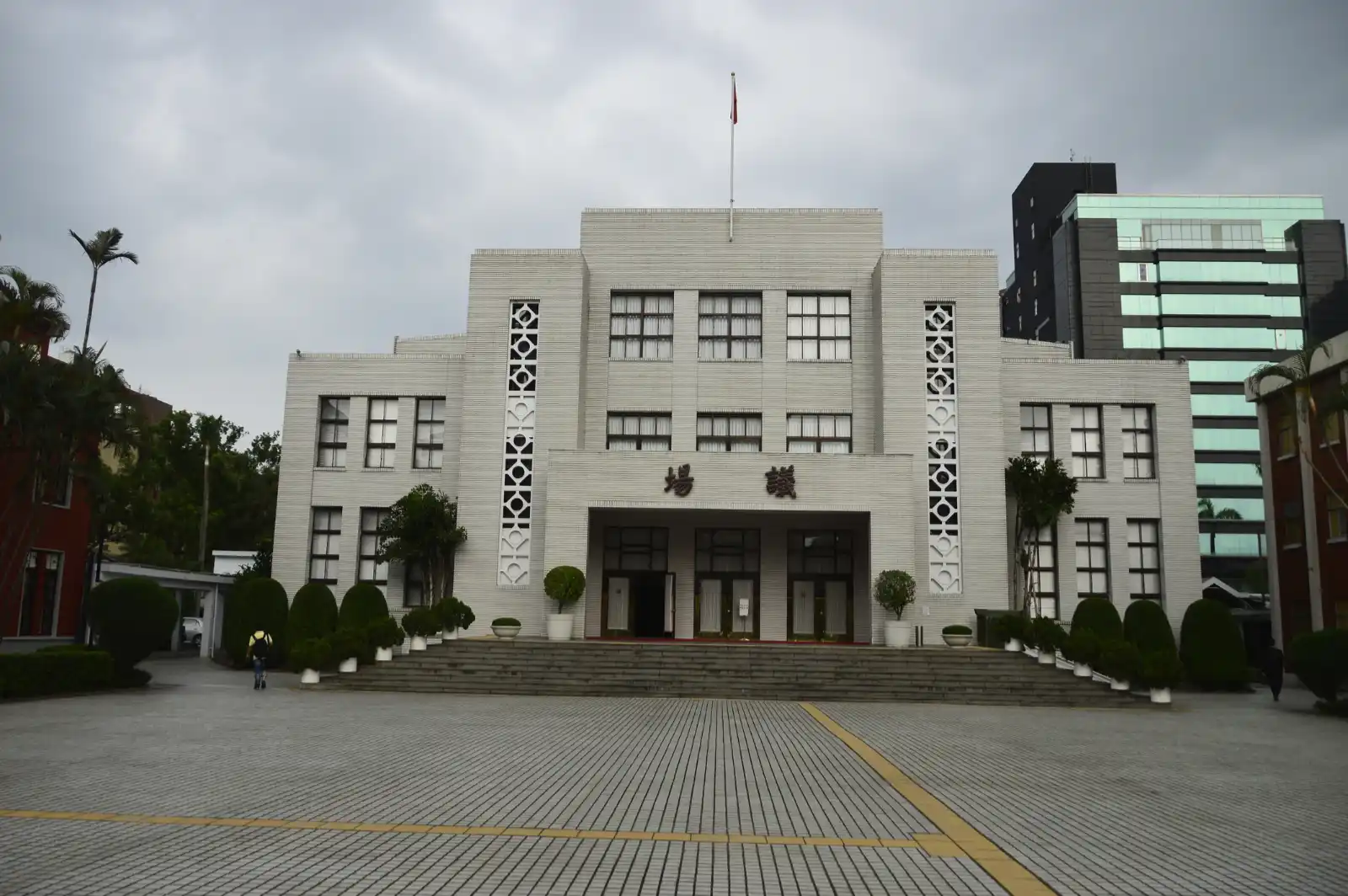
On May 8, Taiwan's Legislative Yuan passed the Special Act for Safeguarding National Security and Strengthening Asymmetric Capabilities, a NT$780 billion (approximately US$25 billion) defense package that is the largest of its kind in Taiwan's history but 38 percent smaller than the NT$1.25 trillion (~$40 billion) the Lai administration originally proposed. The bill passed 59–51, with the opposition KMT and TPP voting in favor and the ruling DPP voting against.
For Taiwan's drone industry, the headline number isn't what matters. What matters is what was cut.
What was removed
The original proposal allocated roughly one-third of total spending to unmanned systems. The plan covered approximately 200,000 drones and 1,320 unmanned surface vessels to be procured over 2026–2032, along with AI-enabled command and control, counter-UAS systems, the T-Dome missile defense network, and NT$64 billion for joint Taiwan–US R&D and equipment procurement.
The version that passed funds US arms sales that have already been announced or are pending, primarily a roughly $11 billion package authorized late last year (artillery, drones, and Javelin anti-tank missiles) and a second package reportedly worth at least $13 billion that the US government is still finalizing. Military analyst Arthur Ding of National Chengchi University has suggested the Trump administration was holding the second package until after the mid-May Trump–Xi meeting.
What was stripped out: every meaningful line item for domestically procured drones, indigenous defense manufacturing, AI-assisted command and control, T-Dome, and the joint Taiwan–US R&D fund. New domestic defense drone procurement for 2026 drops to zero.
Specific platforms eliminated include 4,040 medium-range loitering munitions with a minimum range of 180 km and 32 Albatross II long-range platforms with range exceeding 2,000 km. The 48,750-unit Armaments Bureau procurement, which had been a critical anchor order for Taiwan's drone industry, is now indefinitely delayed.
In practical terms: the budget buys American weapons but does not invest in building Taiwan's own drone production capacity.
Both sides of the argument
The positions of both parties matter for understanding what happens next.
The KMT and TPP argue that the domestic procurement components lacked sufficient transparency and oversight. KMT legislators have pointed out that US Foreign Military Sales come with established procedures, fixed pricing, and Letters of Offer, while domestic drone procurement involves direct government-to-industry contracts that they believe require more legislative scrutiny. Opposition figures have cited past procurement scandals, including a 2022 case in which the Ministry of National Defense reportedly awarded a security contract to a company that had falsified bidding documents, as justification for tighter controls. They argue that drone procurement should run through the regular annual budget cycle, where each year's contracts can be reviewed individually. Former KMT deputy defense minister Andrew Yang has expressed optimism that the remaining items could be authorized in later budgets once the Cabinet and MND provide more detail on indigenous weapons procurement processes.
The DPP government and defense officials counter that annual budgeting cannot generate the scale or predictability the industry needs. Vice Defense Minister Hsu Szu-chien has argued that funding the drone production initiative through the general budget would be "neither time-efficient nor sufficient to stimulate industry growth." Defense officials note the budget was developed in consultation with the US government and that the items cut — drones, counter-drones, AI command and control — are precisely the capabilities Taiwan needs most urgently. Lo Chih-cheng, a senior research fellow at Taiwan's Institute for National Policy Research, has framed the cuts as a direct weakening of Taiwan's defense capabilities at a moment when the cross-strait military balance is "rapidly tilting in favour of the PRC."
The US State Department's reaction was unusually pointed: a spokesman called the delays in funding the remaining capabilities "a concession to the Chinese Communist Party."
Both positions contain genuine substance. Procurement oversight matters. So does the demand certainty that allows an industrial base to scale. The legislation as passed addresses the first concern by deferring the second.
The capability gap that just widened
According to research from Taiwan's Defense and Security Research Institute (DSET), Taiwan's armed forces currently field roughly 5,000 combat-relevant drones, with preserved US FMS deliveries projected to bring that figure to approximately 7,000. Active platforms include the Capricorn (Army), Albatross I, Cardinal II, and Mighty Hornet I (Navy), and the Chien Hsiang anti-radiation drone (Air Force). Confirmed counter-UAS programs total just NT$5.3 billion across two procurements.
These figures sit against an adversary whose annual drone production runs into the millions, a Ukrainian benchmark of over 7 million units targeted for 2026, and a US procurement push toward 300,000 systems.
Inventory is one problem. Range is another. Taiwan's domestically produced platforms operate with effective ranges well below 50 km. The Taiwan Strait averages 180 km wide. The CNAS report Hellscape for Taiwan: Rethinking Asymmetric Defense concluded that credible layered defense requires platforms operating 40–80 km offshore for screening, with long-range strike assets reaching beyond 100 km. The cut Albatross II units and 4,040 medium-range loitering munitions were what closed that range gap on paper. Without them, Taiwan's domestically produced inventory cannot reach the operational kill zone in the Strait itself.
What the industry is saying
The reaction from Taiwan's drone manufacturers has been blunt. Max Lo, chairman of the Taiwan National Drone Industry Association, called the budget uncertainty a "disaster" for domestic production. His concern is structural: manufacturers need confidence in future order volumes before investing in expanded capacity. Without long-term government commitments, companies will not build new production lines, hire additional workers, or fund the R&D required to scale.
The math is straightforward. Taiwan's drone sector now spans roughly 267 manufacturers across Tier 1 to Tier 3 of the supply chain. Annual production rose from 8,000–10,000 units in 2024 to an estimated 123,000 in 2025. Yet unit costs remain two to three times higher than equivalent Chinese-produced systems on the broad average, with the gap narrowing substantially for military-grade commercial platforms where anti-jamming, autonomous flight, and reliability matter more than unit price. The path to competitive pricing runs through volume, volume runs through orders, and the largest predictable source of orders just got cut.
But the executive branch isn't standing down
The same month the legislature passed its reduced budget, the executive branch publicly reaffirmed its industrial drone targets. On May 21, Chiou Chyou-huey, director-general of the MOEA's Industrial Development Administration, said Taiwan should reach 100,000 drones per month in production capacity by 2030 — up from current capacity of roughly 15,000 units per month, a 6.5x scale-up over five years. The same briefing projected that exports will account for over 50 percent of Taiwan's drone output by 2030, up from just over 20 percent today.
The MOEA numbers from the briefing put recent industry growth in context. Taiwan's drone output value grew 2.5-fold in 2025 to NT$12.9 billion (US$408 million). Drone exports reached US$147 million in the first four months of 2026 alone — already more than 1.5x the US$93 million exported in all of 2025.
This is the dynamic worth watching. The legislative branch has just defunded the domestic orders that would have anchored production scale-up. The executive branch is publicly committing to a 6.5x production increase over the same five-year horizon. Both targets cannot be reconciled under current policy. Either the MOEA targets quietly retreat, or the executive finds another way to anchor the scale-up — most plausibly, by accelerating the export-led growth that doesn't depend on the domestic procurement cycle the legislature controls.
The export picture tells a different story
While the domestic budget debate has dominated headlines, Taiwan's export numbers have moved in the opposite direction.
Taiwan shipped over 139,000 finished drones to international markets in the first quarter of 2026 alone, surpassing the total of roughly 107,000 units exported in all of 2025. By value, the Czech Republic has surpassed Poland as the top destination, accounting for roughly US$100 million of Q1 exports, with Poland recording about US$11.75 million and the United States now firmly among the top destinations.
A qualification is warranted: the overwhelming majority of these exports are small commercial-grade platforms in the Group 1 category (2–15 kg, roughly $800–$1,000 per unit). For military-grade Group 3 and Group 4 platforms, Taiwan still depends almost entirely on US FMS. The export surge demonstrates production capability at the small-platform end of the spectrum, not yet at the military-grade end.
Concrete evidence of the international pivot continues to accumulate. At the recent XPONENTIAL 2026 unmanned systems exhibition in Detroit, Taiwanese firms generated approximately NT$1.3 billion in preliminary business opportunities and signed memoranda of understanding with the Michigan Drone Association and the North Dakota Trade Office, focused on autonomous flight, urban air mobility, and shared testing and certification facilities. These are exactly the kinds of relationships — operator partnerships, test access, certification pathways — that move Taiwanese manufacturers up the value chain toward the higher-end systems where their competitive position is strongest.
What matters strategically is that this demand is growing independently of Taiwan's domestic budget. European demand reflects the war in Ukraine, NATO's push to eliminate Chinese components from military supply chains, and the broader "non-red" procurement trend. The US market is developing its own momentum through the Pentagon's $54.6 billion DAWG budget, the pending Blue Skies for Taiwan Act, and the AUVSI–ITRI Green UAS certification partnership.
What this means for suppliers
For Taiwanese drone manufacturers, the budget vote creates a split reality.
Domestic demand uncertainty has increased materially. If domestic procurement re-enters through the annual budget cycle, contract awards for the 48,750-unit Armaments Bureau program may not occur before mid-2027 — a near two-year standstill at exactly the moment Taiwan's industry was scaling. Manufacturers who built business plans around the original 200,000-unit target will need to recalibrate. Some may slow expansion. Others should accelerate the pivot to export-oriented production that the MOEA is now publicly endorsing.
Export strategy is now the survival strategy and it is now also explicit government policy. The companies that have already built international relationships, pursued Green UAS or Blue UAS readiness, and established US OEM partnerships are visibly better positioned than those relying primarily on government contracts. The XPONENTIAL MOUs and the MOEA's 50-percent export target signal that the executive branch will be putting its trade promotion weight behind firms moving in this direction. Diversified demand bases insulate against domestic political volatility in a way that pure MND-dependence does not.
The US framework is moving on its own schedule. The Department of Defense's FY2026 NDAA implementation plan for joint Taiwan–US development and production of unmanned and counter-UAS systems is due in June. The Blue Skies for Taiwan Act would fast-track Blue UAS certification for Taiwan suppliers. Manufacturers who invest now in China-free supply chains, cybersecurity hardening, and US partnerships will be positioned for a market that exists regardless of what happens in the Legislative Yuan.
A note on the time cost: supply chain positioning is the consequence least reversible by later spending. Suppliers establishing compliance records and procurement relationships during this realignment window will occupy structural positions that later entrants cannot readily replicate. A two-year standstill is more than a delay. It is a forfeiture of position within a supply chain architecture that will define unmanned systems competition for the next decade.
What this means for international buyers
If you're a defense contractor or government agency evaluating Taiwan as a drone supply source, the vote introduces a real but specific nuance.
Taiwan's manufacturing capability is unchanged. The companies, factories, production lines, and engineering talent are all still in place. No industrial capacity was destroyed; one major source of demand was deferred.
Export-oriented suppliers may become more accessible in the short term. Manufacturers whose domestic order books just thinned have more capacity available for international customers. A company expecting to spend the next two years on MND contracts now has production bandwidth for commercial and allied defense orders. For buyers, this may translate into shorter lead times and more engaged suppliers.
The political situation bears continued monitoring. Taiwan's drone industry sits at the intersection of defense policy, industrial policy, and cross-strait relations. The current KMT position — supporting drone development through annual budgeting rather than special budgets — still implies continued domestic procurement, just at lower and less predictable volumes. A second special budget remains possible, though politically difficult. The situation is not static.
Looking ahead
The May 8 vote is a setback for Taiwan's domestic drone procurement plans, but it does not negate the underlying market. Export demand is surging. International partnerships are multiplying. The US legislative and procurement framework is actively being built to integrate Taiwanese manufacturers. And the MOEA's May 21 reaffirmation of a 100,000-unit-per-month production target by 2030 makes clear that — whatever the legislature funds — the executive branch's policy ambition for the sector has not retreated.
The manufacturers who treat this as a signal to accelerate their international strategy rather than wait for domestic politics to resolve will be the ones best positioned over the next 12 to 24 months. Whether allied engagement and export-led demand can substitute for the domestic anchor orders the legislature just cut is now the central question for the sector and for the regional security architecture being built around it.
We will continue to track the budget situation and its industry implications in Taiwan Drone Weekly.
→ Subscribe: www.taiwandrones.com/subscribe
→ Suppliers: contact us at info@taiwandrones.com
Sourcing drones or components from Taiwan?
Tell us what you need — we match it to verified Taiwan-based manufacturers and make the introduction. There's no charge to submit a request.
Source these components from Taiwan →Taiwan's Drone Talent Gap Is a Global Problem With Local Causes
Oct 7, 2026
The US Army has the drones but not enough operators, and Ukraine and Europe lack...
Taiwan Has No Rare Earth Reserves. Can It Still Build a Magnet Supply Chain?
Aug 24, 2026
ITRI plans to transfer neodymium and dysprosium refining technology to private i...
Taiwan's Government Says a 15% Drone Tariff Is a Competitive Edge. But Are Suppliers Ready to Claim It?
Aug 18, 2026
Days after Washington signed the Section 232 drone tariffs, the first Taiwanese...